FDA Registered vs FDA Approved: What Hair Care Brands Need (2026)
- Understanding fda registered hair care is essential for hair care brand owners.
- This guide covers practical aspects for sourcing and product decisions.
- Ecolchi Group is a 21-year manufacturer with ISO 22716, FDA, CE, GMP certifications, exporting to 130+ countries.
The hair care industry is full of specialized terms and concepts. fda registered hair care is one of the most important for anyone launching or scaling a hair care brand.
This guide covers what fda registered hair care means, how it affects your business, and how to evaluate it when choosing a manufacturing partner or making product decisions.
By the end, you’ll understand how to navigate this topic confidently and use it to grow your brand.
Table of Contents
- FDA Approved vs FDA Registered: The Difference
- What Does FDA Registered Mean?
- Do I Need FDA Registration to Sell in the US?
- How Much Does FDA Registration Cost?
- What If I Sell Without FDA Registration?
- Frequently Asked Questions
FDA Approved vs FDA Registered: The Difference
Most hair care products (shampoos, conditioners, masks, oils) are FDA REGISTERED, not FDA approved. FDA approval is for drugs, not cosmetics. Cosmetics are self-regulated under FDA MoCRA 2023.
What Does FDA Registered Mean?
It means the facility is registered with FDA and the product is listed. There is no pre-market review or approval for cosmetics. The product must be safe and properly labeled, with safety substantiation on file.

Do I Need FDA Registration to Sell in the US?
Yes — since MoCRA 2023, all cosmetic products sold in the US require facility registration and product listing. Non-compliance fines can reach $5,000+ per product per violation.

How Much Does FDA Registration Cost?
Self-registration is free. Testing for safety substantiation costs $1,000–$5,000 per product. Total first-year cost for 3–5 products: $3,000–$15,000.

What If I Sell Without FDA Registration?
FDA can issue warning letters, demand product recalls, seize products, and impose fines up to $5,000+ per product per violation. Not worth the risk.

Related Guides from Ecolchi
- Lusstaly Moisturizing Repair Shampoo
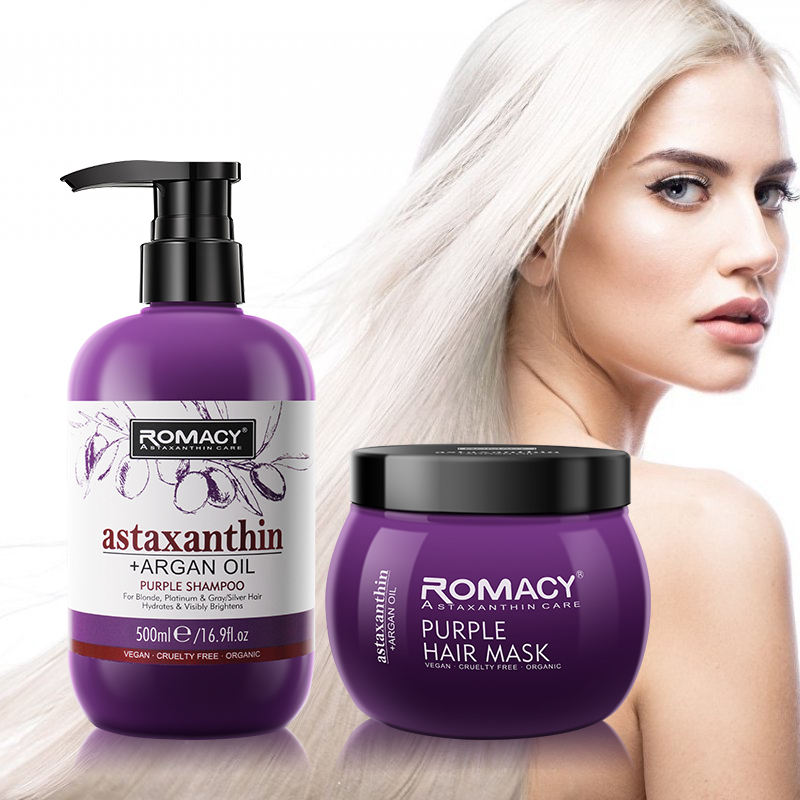
- Romacy Salon Purple Shampoo
- Ecolchi OEM Paraben-Free Collagen Shampoo
- Ecolchi OEM Keratin Hair Conditioner
- Ecolchi Private Label Moroccan Argan Oil
What FDA Actually Regulates (and Doesn’t) in Cosmetics
FDA regulates cosmetics under the Federal Food, Drug, and Cosmetic Act (FDCA) and the Modernization of Cosmetics Regulation Act (MoCRA) of 2022. FDA does NOT require pre-market approval for cosmetic products or ingredients (with the exception of color additives).
What FDA does require: (1) facility registration (free, mandatory since 2024), (2) product listing (free, mandatory since 2024), (3) ingredient listing on package (mandatory), (4) safety substantiation (mandatory but kept on file, not submitted), (5) adverse event reporting (mandatory, 15 business days for serious events).
What FDA does NOT require: (1) pre-market approval of formulas, (2) pre-market approval of labels, (3) pre-market approval of marketing claims (although false claims are illegal), (4) cruelty-free certifications, (5) organic certifications.
FDA can take action against: adulterated products (containing harmful substances), misbranded products (false or misleading labels), products that cause injury, and products with prohibited ingredients (only 11 prohibited ingredients as of 2024).

MoCRA 2024: What Changed and How to Comply
MoCRA (Modernization of Cosmetics Regulation Act of 2022) took effect in 2024. The key changes: (1) facility registration mandatory (deadline was Dec 29, 2023 for existing facilities, within 120 days for new ones), (2) product listing mandatory (one listing per product, with all ingredients), (3) safety substantiation must be kept on file and available within 24 hours of FDA request, (4) serious adverse event reporting within 15 business days, (5) GMP standards to be established by FDA (still pending as of 2026).
Penalties for non-compliance: warning letters, product recalls, import alerts, and in severe cases criminal prosecution. FDA issued 47 warning letters to cosmetic companies in 2024, mostly for unlisted products and missing facility registration.
Compliance cost for a small brand (5-10 SKUs): $0 in government fees + $2K-$5K for a regulatory consultant to set up the listings. DIY is possible but error-prone.

See our CE Marking EU guide and complete certifications overview for related context.
FDA Facility Registration: Step-by-Step
Step 1: Go to FDA’s cosmetic registration portal at erportal.fda.gov. Create an account with your business email. Allow 1-2 business days for FDA to verify your account.
Step 2: Add your facility address(es). For most brand owners, this is your contract manufacturer’s address. You will need: facility name, address, FEI number (FDA Establishment Identifier, which is auto-generated on first registration), and a US Agent (required for non-US facilities).
Step 3: For each facility, list all cosmetic products manufactured. Each product listing requires: product name, brand, category (skin care, hair care, etc.), ingredients list (all ingredients in INCI format), and product listing date.
Step 4: Submit. The portal gives you a confirmation number. Save this for your records. FDA does not issue a paper certificate, but you can download a confirmation PDF.
Step 5: Update annually or when products change. Facility registration must be renewed annually (due Dec 31). Product listings must be updated within 120 days of any formulation change.
Common mistake: registering only one facility when products are made at multiple locations. FDA requires registration of every facility involved in manufacturing, including secondary packagers and labelers.
See our CE Marking EU guide and ISO 22716 standards for context.
Common FDA Compliance Mistakes: What Gets You in Trouble
Mistake 1: Not registering facilities. FDA issued 47 warning letters in 2024 mostly for this. Cost: $0 to comply (free), but missing it is a criminal offense under MoCRA.
Mistake 2: Incomplete product listings. Listing the product but not all ingredients, or listing ingredients in wrong order. FDA requires ingredients in INCI format, in descending order of concentration.
Mistake 3: Missing or invalid safety substantiation. Many brands keep minimal files. FDA can request within 24 hours; if you can’t produce, you get a warning letter and possibly a product recall.
Mistake 4: Late adverse event reporting. Serious events must be reported within 15 business days. Many brands miss this deadline. Failure to report is a federal violation.
Mistake 5: Using prohibited or restricted ingredients. The FDA’s 11 prohibited ingredients list (e.g., chloroform, mercury compounds) and restricted list must be checked for every new product.
Mistake 6: Not updating listings when formulas change. Product listings must be updated within 120 days of any formulation change. Most brands forget this.

See our CE Marking EU guide and complete certifications for context.
Frequently Asked Questions
Is hair care FDA approved?
Most hair care products (shampoos, conditioners, masks, oils) are FDA REGISTERED, not FDA approved. FDA approval is for drugs.
What does FDA registered mean?
It means the facility is registered with FDA and the product is listed. There is no pre-market review or approval for cosmetics.
Do I need FDA registration to sell hair care in the US?
Yes — since MoCRA 2023, all cosmetic products sold in the US require facility registration and product listing.
How much does FDA registration cost?
Self-registration is free. Testing for safety substantiation costs $1,000–$5,000 per product.
What happens if I sell without FDA registration?
FDA can issue warning letters, demand product recalls, seize products, and impose fines up to $5,000+ per product per violation.
About the Author
Ecolchi Editorial Team — 21 years of hair care manufacturing expertise. ISO 22716 / GMP / FDA / CE certified factory in Guangzhou, China. 1.2M+ bottles/month capacity. 9 in-house brands: Karseell, Ecolchi, Pallamina, Lusstaly, Romacy, Navensi, Chinchy, Delofil, Hischer. Exporting to 130+ countries.
Reviewed by: Chinchy R&D Team (6 graduate engineers, 20+ new products per year)
Sources & References:
Request Free Fda Registered Hair Care Consultation
No MOQ commitment. Sample lead time 3–5 days. Response within 24 hours.