Hair Care Product Pricing: How Manufacturers Calculate Costs (2026)
- Understanding hair care product pricing is essential for hair care brand owners.
- This guide covers practical aspects for sourcing and product decisions.
- Ecolchi Group is a 21-year manufacturer with ISO 22716, FDA, CE, GMP certifications, exporting to 130+ countries.
The hair care industry is full of specialized terms and concepts. hair care product pricing is one of the most important for anyone launching or scaling a hair care brand.
This guide covers what hair care product pricing means, how it affects your business, and how to evaluate it when choosing a manufacturing partner or making product decisions.
By the end, you’ll understand how to navigate this topic confidently and use it to grow your brand.
Table of Contents
- Hair Care Product Pricing: Cost Breakdown
- Pricing by Product Type (2026)
- How MOQ Affects Pricing
- Total Cost Calculation Example
- How to Lower Per-Unit Cost
- Frequently Asked Questions
Hair Care Product Pricing: Cost Breakdown
A typical 500ml shampoo at $2.00 FOB breaks down:
| Component | % of cost | Per-unit ($) |
|---|---|---|
| Raw materials | 25% | $0.50 |
| Packaging | 20% | $0.40 |
| Labor | 10% | $0.20 |
| Overhead | 15% | $0.30 |
| Manufacturer margin | 30% | $0.60 |
Pricing by Product Type (2026)
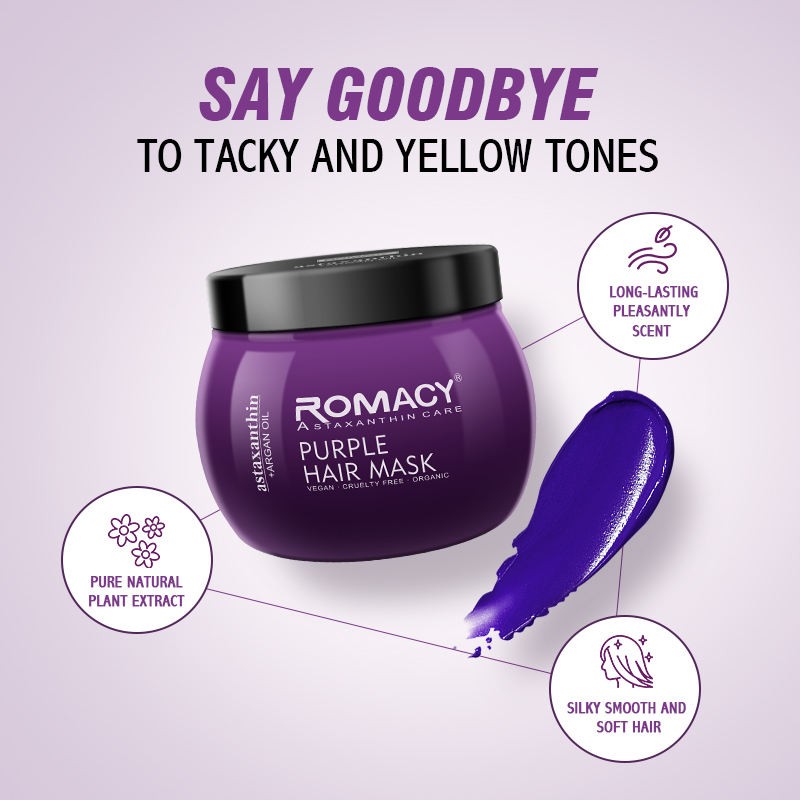
Shampoos and conditioners: $1.20–$2.50. Hair masks: $1.50–$2.80. Hair oils: $1.20–$3.50. Specialty actives drive cost.
How MOQ Affects Pricing
Standard shampoo at different MOQs: 1,000 = $2.50–$3.00, 3,000 = $2.00–$2.50, 5,000 = $1.80–$2.20, 10,000 = $1.50–$1.80, 30,000+ = $1.20–$1.50.

Total Cost Calculation Example
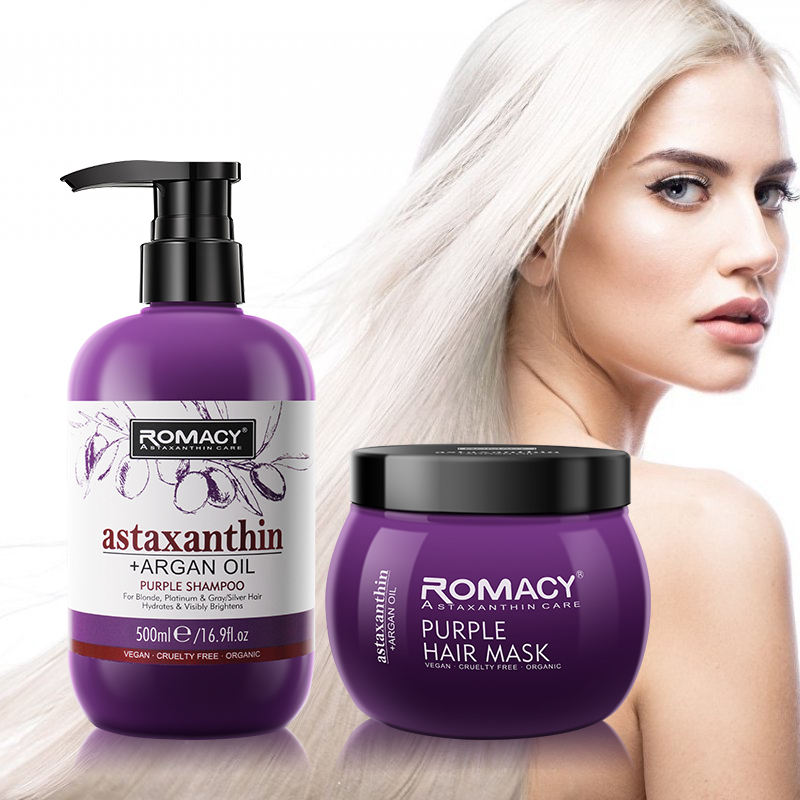
For 5,000 units premium argan shampoo: $11,000 product + $1,000 setup + $750 freight + $715 duty + $200 broker + $250 last-mile = $13,915 total ($2.78/unit).
How to Lower Per-Unit Cost
Three proven strategies: higher volumes, standard packaging, ODM/OBM vs OEM. Combining can cut cost by 50%+.
For first-time brands: start with OBM at low volume to test, transition to ODM with higher volume once a SKU proves out.

Related Guides from Ecolchi
- Romacy Salon Purple Shampoo
- Ecolchi OEM Paraben-Free Collagen Shampoo
- Ecolchi Private Label Moroccan Argan Oil
- Lusstaly Moisturizing Repair Shampoo
- Ecolchi OEM Keratin Hair Conditioner
The Hair Care Pricing Stack: 7 Cost Components
Every hair care product‘s landed price is built from 7 components: (1) raw materials (40-55% of FOB price), (2) packaging (15-25%), (3) labor (10-15%), (4) factory overhead (5-10%), (5) quality control (2-5%), (6) factory margin (10-20%), and (7) shipping/customs (varies, 10-30% of FOB for ocean).
Raw materials are the biggest variable: a 500ml shampoo with commodity surfactants costs $0.80/unit, but one with premium argan oil and silk protein can hit $1.80/unit. The packaging swing is similarly wide: a stock PET bottle costs $0.20 vs $0.80 for custom glass with hot-stamp logo.
When negotiating with manufacturers, ask for an itemized quote (not a single FOB price). This lets you see where the markup is highest and negotiate line by line. Most factories will accept 15-20% price reductions on 2-3 of the 7 components.
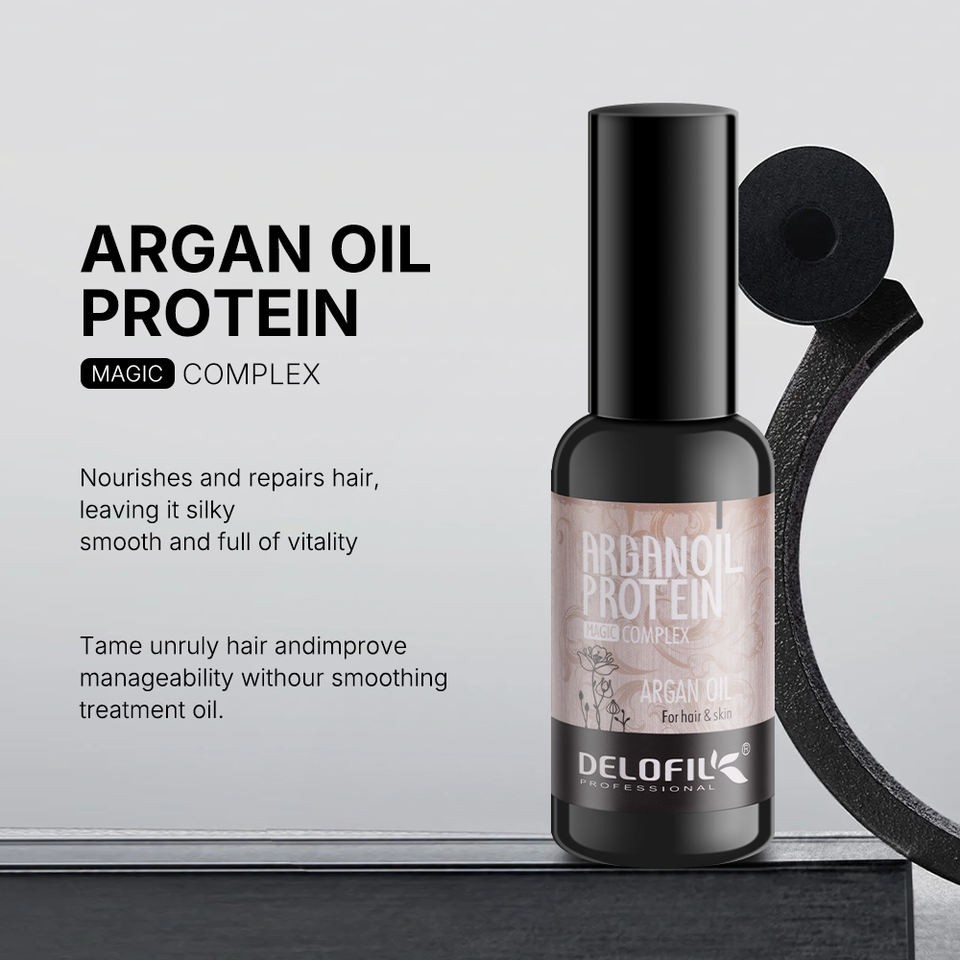
How to Read a Manufacturer Quote (and Spot Hidden Costs)
A transparent quote should include: unit FOB price, MOQ, packaging specs, label design cost (one-time), mold/tooling cost (one-time), sample cost (and whether it’s refundable on order), payment terms (typically 30% deposit + 70% before shipping), and lead time (production + sampling separately).
Red flags in quotes: (1) vague ‘packaging included’ language (always ask for line items), (2) no mention of lead time (could be 30 days or 90 days), (3) ‘shipping extra’ without a destination port specified, (4) no payment milestones (cash advance up to 100% is a no-go), (5) no minimum/maximum order quantity stated clearly.
Hidden costs to budget for: demurrage ($50-$200/day if containers sit at port), customs exam fees ($300-$1,500 random inspections), fumigation ($100-$200 per container for wood packaging), DDP broker markup ($0.20-$0.80/unit over FOB), last-mile delivery from port to warehouse ($0.50-$2.00/unit).
For more on cost structure, see our MOQ guide and our importing from China complete guide.
How to Negotiate 15-20% Lower Prices: 6 Tactics
Tactic 1: Order more, but stay within cash flow. 5,000 vs 3,000 units typically gets 12-15% lower per-unit price. The trade-off is more cash tied up in inventory.
Tactic 2: Mix product types in one purchase order. Most factories have 10-15% off when ordering 3+ SKUs in a single PO, even if total unit count is the same.
Tactic 3: Pay 50% deposit instead of 30%. The factory saves on financing costs and may pass some of those savings to you. Trade-off: more capital at risk if factory underperforms.
Tactic 4: Use the factory’s standard packaging (bottles, caps) instead of custom. Custom packaging adds $0.20-$0.80/unit. Standard packaging is free or $0.05-$0.15/unit.
Tactic 5: Order in the factory’s low season (typically Nov-Feb for Chinese factories). Prices can be 5-10% lower because factories have excess capacity.
Tactic 6: Commit to a multi-order contract (3+ orders over 6-12 months). Most factories offer 8-12% lower pricing for committed volume, even if individual order sizes are smaller.

For more on cost optimization, see our MOQ guide and complete import guide.
Total Landed Cost Calculator: A Worked Example
Let’s work through a 5,000-unit order of premium shampoo from China to a US warehouse.
Step 1 – FOB price: $1.80/unit. Total product cost: $9,000.
Step 2 – Packaging: $0.30/unit for custom label. Total: $1,500.
Step 3 – Mold/tooling: $500 one-time for label printing plate.
Step 4 – Samples: $50-$200 (typically refunded on first order).
Step 5 – Shipping: 1 container (5,000 units fits in 1 cubic meter) ocean freight from Shenzhen to LA. Cost: $750 LCL or $1,500-$2,500 FCL.
Step 6 – Insurance: 0.5% of cargo value = $50.
Step 7 – US import duty: 6.5% on shampoo (HS 3305.10.0000) = $585.
Step 8 – Customs broker: $150 for entry filing.
Step 9 – Last-mile delivery: port to warehouse = $250.
Step 10 – Storage (1 month while awaiting customs): $200.
Total landed cost: $9,000 + $1,500 + $500 + $100 + $1,500 + $50 + $585 + $150 + $250 + $200 = $13,835.
Per unit landed cost: $2.77. Retail at $24.99 = gross margin 89%. After Amazon fees (15%) and ad spend (30% of revenue), net margin is realistic at 25-35%.
For more, see our MOQ guide and import from China.
Frequently Asked Questions
How do hair care manufacturers calculate pricing?
Raw material + packaging + labor + overhead + margin. For 500ml shampoo: $0.50–$1.20 + $0.40–$0.80 + $0.10–$0.30 + $0.20–$0.50 + $0.30–$0.70 = $1.50–$3.50/unit.
What is the typical cost breakdown?
500ml shampoo at $2.00 FOB: 25% raw materials, 20% packaging, 10% labor, 15% overhead, 30% manufacturer margin.
How much does hair care cost per unit at MOQ?
Standard shampoo $1.20–$2.00. Premium (argan/biotin/keratin/sulfate-free) $1.80–$3.00. Mask $1.50–$2.80. Oil $1.20–$3.50.
What is the minimum viable order cost?
1,000-unit first order: 1,000 × $3.00 + $500–$1,000 packaging + $500–$1,000 setup = $4,000–$5,000. Total with shipping: $6,000–$8,000.
How can I lower my per-unit cost?
Three ways: higher volumes, standard packaging, ODM/OBM vs OEM. Combining can cut cost by 50%+.
About the Author
Ecolchi Editorial Team — 21 years of hair care manufacturing expertise. ISO 22716 / GMP / FDA / CE certified factory in Guangzhou, China. 1.2M+ bottles/month capacity. 9 in-house brands: Karseell, Ecolchi, Pallamina, Lusstaly, Romacy, Navensi, Chinchy, Delofil, Hischer. Exporting to 130+ countries.
Reviewed by: Chinchy R&D Team (6 graduate engineers, 20+ new products per year)
Sources & References:
Request Free Hair Care Product Pricing Consultation
No MOQ commitment. Sample lead time 3–5 days. Response within 24 hours.