ISO 22716 for Cosmetics: Complete Manufacturer’s Guide (2026)
- Understanding iso 22716 cosmetics is essential for hair care brand owners.
- This guide covers practical aspects for sourcing and product decisions.
- Ecolchi Group is a 21-year manufacturer with ISO 22716, FDA, CE, GMP certifications, exporting to 130+ countries.
The hair care industry is full of specialized terms and concepts. iso 22716 cosmetics is one of the most important for anyone launching or scaling a hair care brand.
This guide covers what iso 22716 cosmetics means, how it affects your business, and how to evaluate it when choosing a manufacturing partner or making product decisions.
By the end, you’ll understand how to navigate this topic confidently and use it to grow your brand.
Table of Contents
- What Is ISO 22716?
- Who Needs ISO 22716?
- What Does ISO 22716 Cover?
- How Long Does ISO 22716 Certification Take?
- Is ISO 22716 Required by Law?
- Frequently Asked Questions
What Is ISO 22716?
ISO 22716 is the international standard for cosmetics Good Manufacturing Practices (GMP), published in 2007. It provides guidance for documenting and regulating the production, control, storage, and shipment of cosmetic products. It is the global benchmark for cosmetics quality.

Who Needs ISO 22716?
Any hair care manufacturer selling to regulated markets (US, EU, Japan, Korea, etc.). Most major retailers and brand owners require ISO 22716 certification.

What Does ISO 22716 Cover?
17 chapters covering: quality risk management, personnel, premises, equipment, materials and packaging, production, quality control, documentation, release, storage, and shipping. The standard provides a comprehensive framework for cosmetics quality.

How Long Does ISO 22716 Certification Take?
Initial certification takes 6–12 months including gap analysis, system implementation, internal audits, and the certification audit by an accredited body. Annual surveillance audits are required to maintain certification.
Is ISO 22716 Required by Law?
Not directly in most countries, but it is the de facto standard for cosmetics GMP and is referenced in many regulations. Major retailers require it. EU CPNP notification assumes ISO 22716 compliance. FDA MoCRA encourages it.

Related Guides from Ecolchi
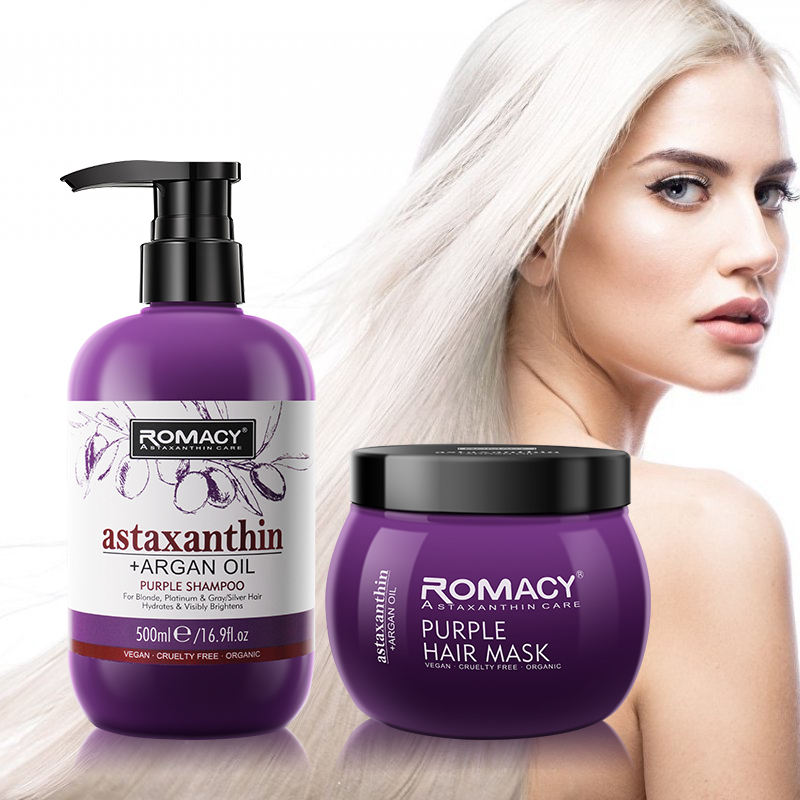
- Romacy Salon Purple Shampoo
- Ecolchi OEM Paraben-Free Collagen Shampoo
- Ecolchi Private Label Moroccan Argan Oil
- Ecolchi OEM Keratin Hair Conditioner
- Ecolchi OEM Organic Keratin Shampoo
The 16 Chapters of ISO 22716: What Each One Covers
ISO 22716 has 16 chapters covering the full lifecycle of cosmetic manufacturing: (1) Scope, (2) Normative references, (3) Terms and definitions, (4) Documentation, (5) Management responsibility, (6) Resource management, (7) Production, (8) Quality control, (9) Release of finished products, (10) Storage, (11) Technical agreements, (12) Outsourced activities, (13) Deviations, (14) Complaints and recalls, (15) Internal audit, (16) Improvement.
Chapter 7 (Production) is the most detailed, covering personnel training, premises (cleanliness, lighting, ventilation), equipment qualification and maintenance, sanitation, materials handling, packaging operations, and rework/reprocessing rules.
Chapter 8 (Quality Control) requires incoming material testing, in-process testing, finished product testing, retained samples, stability testing, microbiological testing, and method validation. A factory without a dedicated QC lab cannot meet ISO 22716.

How ISO 22716 Audit Works: 4-Stage Process
Stage 1 (Document Review): The auditor reviews your quality manual, SOPs, and documentation for completeness. Duration: 1-2 days on-site or 1 week off-site. Common findings: missing SOPs, outdated versions, undocumented procedures.
Stage 2 (On-site Audit): The auditor walks the production floor, interviews personnel, reviews records, and observes operations. Duration: 3-5 days for a mid-size factory. Common findings: personnel not following SOPs, missing batch records, equipment not calibrated.
Stage 3 (Audit Report): Within 2-4 weeks of the on-site audit, the auditor issues a report listing any non-conformities (major or minor) and observations. Major non-conformities block certification; minors require corrective action within 90 days.
Stage 4 (Certification and Surveillance): After corrective actions are verified, the certification body issues the ISO 22716 certificate, valid for 3 years. Annual surveillance audits (1-2 days each) verify continued compliance. Full re-certification audit at year 3.

See our GMP vs ISO 22716 comparison and FDA requirements for adjacent context.
The Cost of ISO 22716 Certification: What to Budget
First-time certification costs: $20K-$60K total. Breakdown: consultant fees $10K-$25K (optional but recommended), audit fees $5K-$15K, internal resource time $5K-$15K, documentation tools and software $1K-$5K, corrective actions $1K-$5K.
Ongoing costs after certification: surveillance audits $3K-$8K annually, internal audits (self or third-party) $2K-$5K annually, documentation updates $1K-$3K annually, full recertification every 3 years $10K-$25K.
Total cost over 3-year cycle: $40K-$90K. For a factory doing $1M+ annual revenue, this is 1-3% of revenue – manageable. For a smaller factory, it can be 5-10% of revenue, which is why some smaller factories skip certification.
When a brand owner is choosing a factory, ISO 22716 certification typically adds 3-8% to per-unit FOB cost (the factory recoups its certification investment). For most premium brands, this cost is justified by retail partnerships, regulatory compliance, and quality assurance.
See our complete certifications guide and GMP certified manufacturer for context.
ISO 22716 vs ISO 9001 vs ISO 14001: How They Differ
ISO 22716 is cosmetics-specific GMP. Required for cosmetic manufacturing. 16 chapters covering production through quality control. Recognized in 50+ countries.
ISO 9001 is general quality management. Applies to any industry. Focuses on customer satisfaction, process improvement, and management responsibility. 7-10 chapters. Recognized globally.
ISO 14001 is environmental management. Applies to any industry. Focuses on reducing environmental impact, regulatory compliance, and continuous improvement. 10 chapters. Recognized globally.
How they relate: a well-run cosmetic factory will typically have all three: ISO 22716 for cosmetics GMP, ISO 9001 for general quality, and ISO 14001 for environmental. Some retailers require specific ones. For example, Walmart and Target increasingly require ISO 22716. EU and UK retailers often require both ISO 22716 and ISO 14001.
Priority for new cosmetic brands: ISO 22716 is the must-have. ISO 9001 and ISO 14001 are nice-to-haves. When evaluating a factory, ask which they have and verify the certificates.
See our GMP manufacturer and FDA registration for context.
Key Takeaways for Brand Owners
ISO 22716 is the cosmetics-industry standard for manufacturing quality. It’s a meaningful investment ($40K-$90K over 3 years) but pays back through retailer requirements, regulatory compliance, and brand credibility.
When evaluating a factory, ask for their ISO 22716 certificate and verify with the issuing body. Refusal to share or provide the certificate number is a red flag.
If you need EU retail or Walmart/Target/Amazon distribution, ISO 22716 is essentially required. For DTC-only brands, it’s still recommended but not strictly required.
Ecolchi Group is ISO 22716 certified since 2018, with annual surveillance audits and 3-yearly recertification.
See our complete certifications and GMP manufacturer for more.
For brands considering their first private label launch, partnering with an ISO 22716 certified manufacturer like Ecolchi Group removes a major variable: you can focus on branding and marketing, knowing that the manufacturing side meets the highest international quality standard. This is one of the most important decisions for long-term brand credibility, especially in regulated markets like the EU and increasingly in US retail channels.
Frequently Asked Questions
What is ISO 22716?
ISO 22716 is the international standard for cosmetics Good Manufacturing Practices (GMP), published in 2007.
Who needs ISO 22716?
Any hair care manufacturer selling to regulated markets (US, EU, Japan, Korea, etc.).
What does ISO 22716 cover?
17 chapters covering: quality risk management, personnel, premises, equipment, materials and packaging, production, quality control, documentation, release, storage, and shipping.
How long does ISO 22716 certification take?
Initial certification typically takes 6–12 months including gap analysis, system implementation, internal audits, and the certification audit.
Is ISO 22716 required by law?
Not directly in most countries, but it is the de facto standard for cosmetics GMP.
About the Author
Ecolchi Editorial Team — 21 years of hair care manufacturing expertise. ISO 22716 / GMP / FDA / CE certified factory in Guangzhou, China. 1.2M+ bottles/month capacity. 9 in-house brands: Karseell, Ecolchi, Pallamina, Lusstaly, Romacy, Navensi, Chinchy, Delofil, Hischer. Exporting to 130+ countries.
Reviewed by: Chinchy R&D Team (6 graduate engineers, 20+ new products per year)
Sources & References:
Request Free Iso 22716 Cosmetics Consultation
No MOQ commitment. Sample lead time 3–5 days. Response within 24 hours.