
This report covers everything you need to know about the 2024 global haircare market—and the specific opportunities it presents.
Market Overview: By the Numbers

Regional Market Analysis
Asia-Pacific: The Growth Engine
Asia-Pacific is the largest and fastest-growing haircare market globally, driven by:
- China’s cosmetics boom: World’s second-largest beauty market, growing at 8–10% annually
- South Korea’s K-Beauty influence: Innovations like ampoules, essence-infused treatments, and scalp care are driving global trends
- Japan’s premium haircare market: High consumer spending on professional-grade products
- India’s emerging middle class: Rapidly growing demand for premium hair care
- Southeast Asia’s e-commerce surge: TikTok Shop and Shopee driving new brand discovery
Key opportunity: Manufacturing in China gives brands direct access to the world’s most dynamic haircare market—and a base for exporting to the entire Asia-Pacific region.
North America: Premiumization and Clean Beauty
North America (US + Canada) represents approximately $22 billion of the global market:
- Premium products are outperforming mass-market (4.2% vs 1.8% growth)
- Clean beauty is mainstream—over 60% of US consumers prefer “natural” haircare claims
- Textured hair care is a $2.6B+ segment, growing 8%+ annually
- Subscription boxes and DTC brands continue to disrupt traditional retail
- Salon-direct distribution remains powerful for professional products
Europe: Innovation and Regulation
Europe’s $24 billion market is characterized by:
- Strictest cosmetics regulation in the world (EU Cosmetics Regulation)
- Clean beauty leadership — ECOCERT and COSMOS certifications are market standards
- Sustainability focus — packaging waste and carbon footprint are top consumer concerns
- Natural ingredients — strong demand for botanical, herbal, and organic formulations
- Premium positioning — European consumers have high brand loyalty to quality products
Middle East & Africa: Emerging Opportunity
An under-served but rapidly growing market:
- High demand for hair treatments for textured hair (the region’s predominantly curly/coily population)
- Saudi Arabia and UAE are the region’s premium markets
- Growing local manufacturing and import diversification away from traditional suppliers
- Religious and cultural factors drive demand for specific product categories (henna-based, halal-certified)
Latin America: Natural Hair Heritage
A $8 billion market with unique characteristics:
- Strong tradition of natural haircare (avocado, coconut, castor oil)
- Brazil is the region’s largest market and a global haircare innovation hub
- Growing demand for professional salon products and at-home treatments
- Rising middle class driving premiumization in Mexico, Colombia, and Brazil
Market Segment Analysis
Hair Treatments: The Star Category
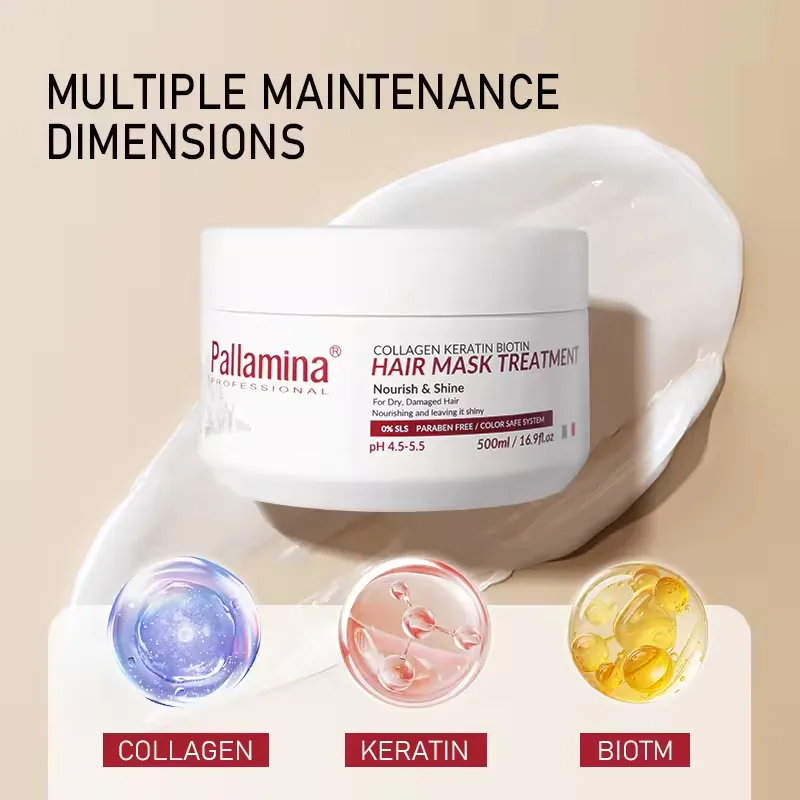
Hair masks, serums, and intensive treatments are the fastest-growing segment:
Why hair masks are outperforming:
- Consumer awareness of deep conditioning benefits has increased
- Professional salon treatments have driven at-home equivalents demand
- Clean beauty trend favors concentrated, multifunctional products
- Social media (TikTok, Instagram Reels) showcases visible before/after results
Sulfate-Free: The New Standard
The sulfate-free shampoo market is growing at 8.4% CAGR—well above the overall shampoo category:
- Color-treated consumers driving demand
- Awareness of ingredient safety increasing
- Professional brands leading the shift
- Premium pricing accepted by consumers
Hair Color: A Growing Market
At $22.3 billion, hair color remains massive:
- At-home coloring accelerated during COVID and has sustained
- Grey coverage demand rising with aging populations
- Fashion colors (blonde, pastel) driving category expansion
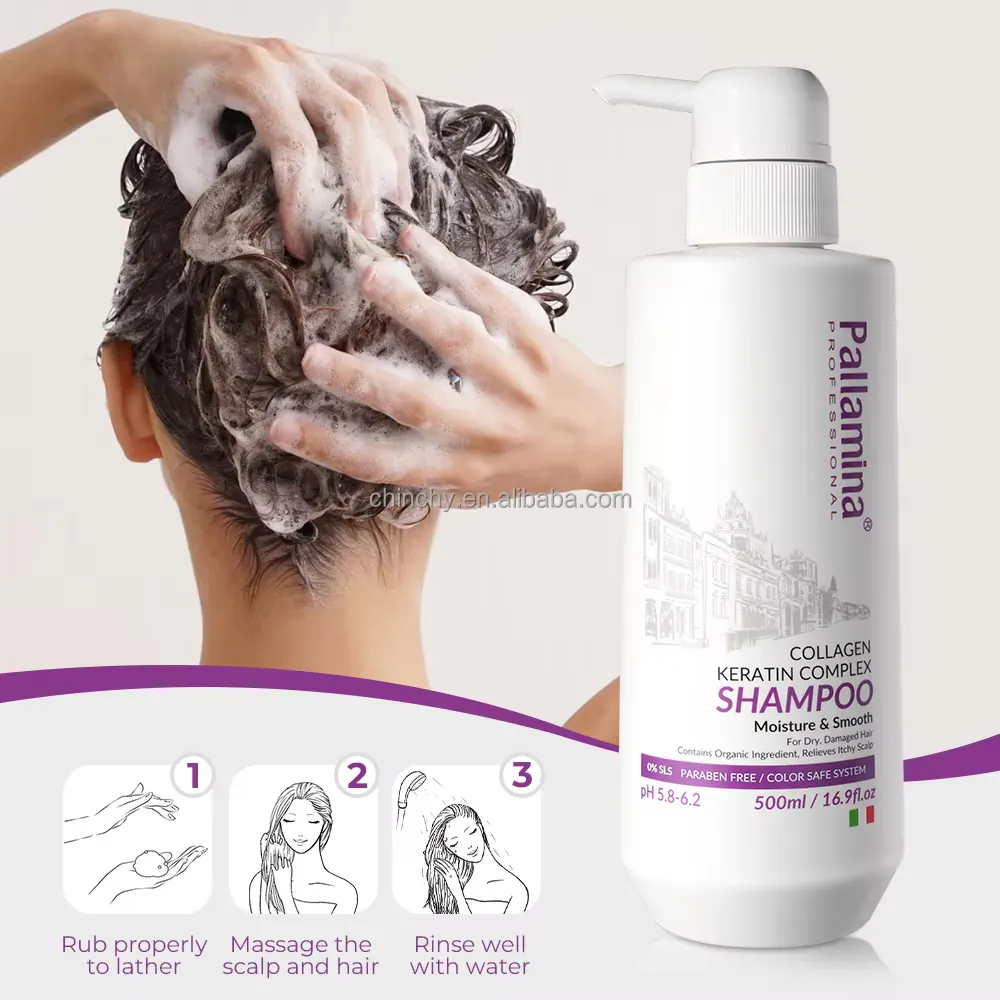
- Purple shampoo and color-depositing masks are new sub-segments
Scalp Care: The Next Frontier
The scalp care category is emerging as the next big growth area:
- “Skinification of hair” — applying skincare logic to scalps
- Scalp scrubs, serums, and treatments growing at 12%+ CAGR
- Scalp microbiome research driving prebiotic/probiotic haircare
- Professional salon influence driving at-home adoption
Key Consumer Trends Shaping the Market
Trend 1: Clean Beauty Is Non-Negotiable
67% of global consumers now actively seek “natural” or “clean” haircare claims. This isn’t a millennial-only phenomenon—it’s cross-generational.
Implication for brands: Your formulations need to match your marketing. “Clean-washing” (making clean claims without substance) is increasingly called out by informed consumers.
Trend 2: Personalization at Scale
From Function of Beauty to Prose, customized haircare is proving that consumers will pay premium prices for products tailored to their specific hair profile.
Implication for manufacturers: ODM (custom formulation) services are increasingly valuable as brands seek differentiation.
Trend 3: Ingredient Transparency
The rise of ingredient-scanning apps has created a generation of consumers who read labels before buying.
Implication for brands: INCI labeling must be accurate and consumer-friendly. Transparency is a competitive advantage.
Trend 4: Sustainability Drives Purchase Decisions
58% of consumers consider a brand’s environmental impact when purchasing haircare products.
Implication for brands: Sustainable packaging, ethical sourcing, and carbon-neutral claims are becoming table stakes—not differentiators.
Trend 5: The “Skinification” of Hair
Skincare ingredients—niacinamide, hyaluronic acid, peptides, ceramides—are migrating into haircare at speed.
Implication for manufacturers: Formulators with cross-category expertise are in high demand.
Trend 6: Textured Hair Goes Mainstream
The natural hair movement has created a $2.6B+ market in North America alone—and similar growth is occurring globally.
Implication for brands: Products specifically designed for curly, coily, and textured hair are underserved in many markets.
Competitive Landscape
Who’s Winning in 2024
Global Players:
- L’Oréal (L’Oréal Paris, Kérastase, Matrix, Pureology)
- Unilever (Dove, TRESemmé, Suave)
- Procter & Gamble (Pantene, Head & Shoulders, Herbal Essences)
- Henkel (Schwarzkopf, Got2b)
- Johnson & Johnson (Neutrogena)
Emerging Disruptors:
- Function of Beauty — AI-powered personalization
- Curlsmith — Natural haircare for textured hair
- K18 — Biomimetic peptide technology (revolutionary bond repair)
- Olaplex — Bond repair technology that created a new category
- Biossance — Squalane-based clean beauty
Private Label / OEM Manufacturers:
The rise of private label haircare is creating competitive pressure on established brands—high-quality products at accessible price points are increasingly available.
Opportunities for Brand Owners and Distributors
Opportunity 1: The Clean Beauty Premium
Consumers willingly pay 20–40% more for products with clean beauty credentials. This premium creates healthy margins for brands that can credibly claim natural, organic, or clean formulations.
Action: Source from manufacturers with ECOCERT, COSMOS, or equivalent certifications. Invest in clean formulations that deliver performance.
Opportunity 2: Professional-to-Retail Crossover
Professional salon products (formerly only available through salons) are increasingly purchased by consumers for home use. The “salon experience at home” positioning commands premium pricing.
Action: Develop professional-grade formulations that can be positioned for both salon and retail channels.
Opportunity 3: Textured Hair Market Expansion
The natural and textured hair care market is underserved globally—particularly in Asia-Pacific, Europe, and the Middle East.
Action: Partner with manufacturers experienced in products for textured hair (Lusstaly’s Pure Argan Oil Hair Serum is specifically formulated for coily and curly hair).
Opportunity 4: Asia-Pacific Export
Asia-Pacific’s 7.3% CAGR is the highest globally—driven by China, South Korea, and Southeast Asia’s growing middle classes.
Action: Source from Chinese manufacturers with proven Asia-Pacific export experience and regulatory knowledge for regional compliance.
Opportunity 5: Subscription and DTC Models
Direct-to-consumer haircare brands using subscription models achieve significantly higher customer lifetime values than one-time purchasers.
Action: If launching a brand, build an e-commerce-first strategy with subscription options.
How to Enter or Expand in the Haircare Market
For New Brand Owners
1. Start with private label — validate demand before investing in custom formulation
2. Choose a differentiated niche — don’t try to compete across all categories
3. Invest in clean formulations — natural ingredients are non-negotiable for most consumers
4. Build a compelling brand story — authenticity drives loyalty
5. Start on social media — TikTok and Instagram are the most effective channels for haircare discovery
For Distributors
1. Partner with certified manufacturers — your reputation depends on product quality
2. Seek exclusive regional distribution — protect your territory
3. Offer complete product lines — full routines (shampoo + conditioner + mask + serum) outperform single products
4. Prioritize clean beauty products — fastest-growing category
5. Build salon relationships — professional channel drives credibility
For OEM/ODM Manufacturers
1. Invest in clean beauty R&D — natural formulation capability is essential
2. Offer full-service programs — from formulation to packaging to shipping
3. Build regulatory expertise — compliance support is a major differentiator
4. Develop textured hair expertise — an underserved and growing market
5. Create content and marketing support — photography, videos, social media assets
The China Manufacturing Advantage
China remains the world’s most competitive haircare manufacturing base for several reasons:
- Scale: Thousands of cosmetics manufacturers, from small workshops to world-class GMP facilities
- Cost: 40–70% lower manufacturing costs than equivalent production in North America/Europe
- Speed: Faster sample turnaround and production timelines
- Capability: Leading Chinese manufacturers now match or exceed Western quality standards
- Innovation: China’s K-beauty-influenced R&D is driving global haircare innovation
Guangzhou Chinchy Cosmetics Co., Ltd. (Ecolchi’s parent company) exemplifies the new generation of Chinese manufacturers—GMP/ISO certified, with 20+ years of experience, exporting to 100+ countries, and offering both OEM and ODM services for brands worldwide.
Final Takeaways: Navigating the 2024 Haircare Market
The global haircare market in 2024 presents remarkable opportunities for brand owners, distributors, and entrepreneurs who understand its dynamics:
✅ Market fundamentals are strong — $95B and growing at 5.2% annually
✅ Clean beauty and natural ingredients are the dominant consumer trend
✅ Hair treatments (masks, serums) are the fastest-growing product category
✅ Asia-Pacific offers the highest growth potential
✅ Private label manufacturing enables low-risk market entry
✅ Clean formulations with certifications command premium pricing
✅ Professional-to-retail crossover is creating new distribution opportunities
Ready to capitalize on the global haircare opportunity? Ecolchi offers world-class manufacturing capabilities—89+ products, GMP/ISO/ISA certified, OEM/ODM/OBM services—for brands and distributors seeking a reliable, quality-focused wholesale haircare supplier. Connect with their international trade team at ecolchifactory.com →