Professional Hair Color Cream: Manufacturer’s Complete Guide (2026)
- Hair color cream is a permanent or semi-permanent dye in cream form — the most popular format for professional salon and at-home use.
- The global hair color market reached $28B in 2025, growing 5.8% YoY.
- There are 3 main types: permanent, demi-permanent, and semi-permanent — each with different durability and damage profiles.
- Manufacturing requires special regulatory compliance (FDA, EU CPNP, often additional regional certifications).
Table of Contents
- 3 Types of Hair color
- How Hair color Works (Chemistry)
- Choosing the Right Hair color Format
- Manufacturing & Regulatory Requirements
- For Brand Owners: Private-Label Hair color
- Frequently Asked Questions
3 Types of Hair color
| Type | Durability | Chemistry | Damage level |
|---|---|---|---|
| Permanent | Until hair grows out | Oxidative + developer | Moderate (lift required) |
| Demi-permanent | 24–28 washes | Oxidative, no lift | Low |
| Semi-permanent | 6–12 washes | Direct dyes, no developer | None |
Featured products:
- Romacy Salon Remove Yellow Color Purple Shampoo Repair Damag
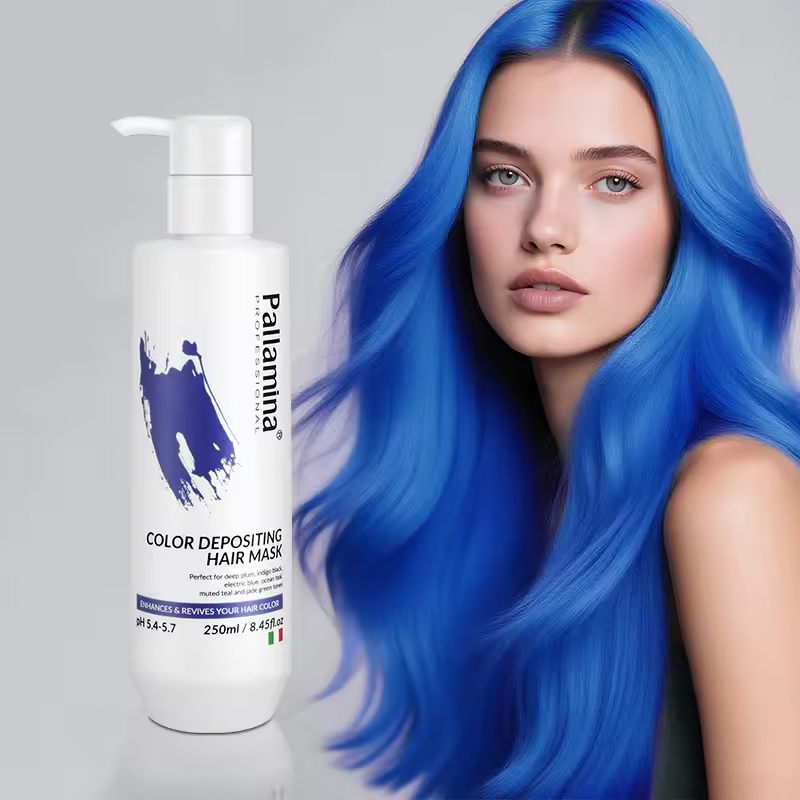
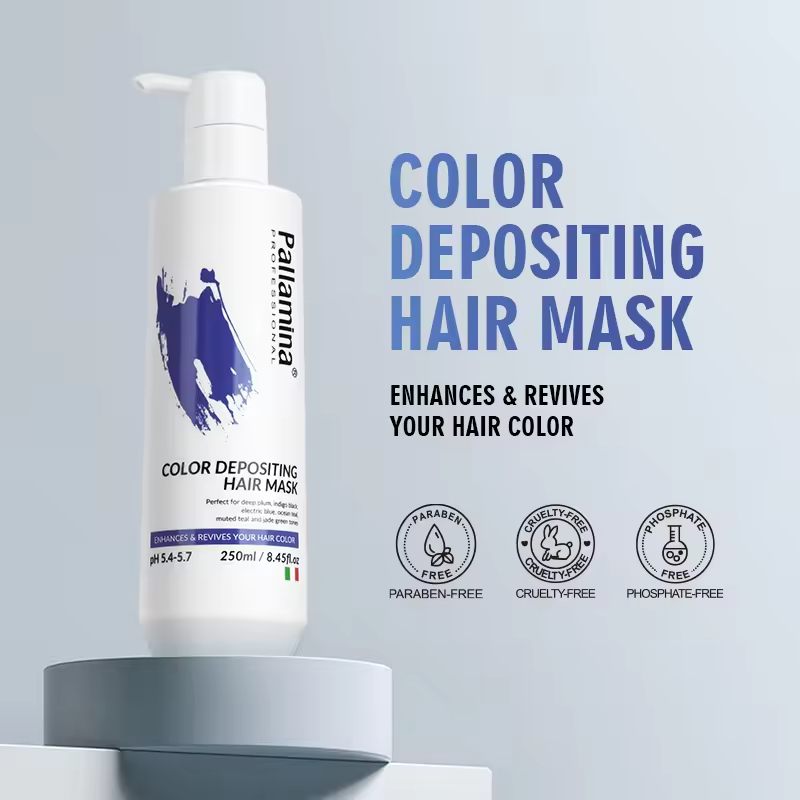
- Pallamina Fast Delivery 250mL Nourishing Healthy Hair Dye Sa

How Hair color Works (Chemistry)
Permanent hair color uses an oxidative process:
- Developer (hydrogen peroxide) opens the hair cuticle
- Alkaline agents (ammonia or MEA) lift the natural pigment
- Oxidative dye precursors (PPD, PTD) enter the cortex and react with the developer to form large color molecules
- Cuticle closes, trapping the color inside
Semi-permanent hair color uses direct dyes that coat the cuticle without entering the cortex — hence the shorter durability.
For comparison, see our Semi-Permanent vs Permanent Hair Color guide.
Choosing the Right Hair color Format
- Permanent: Gray coverage, dramatic color change, fashion shades lasting months
- Demi-permanent: Tone-on-tone enhancement, refresh existing color, low-commitment change
- Semi-permanent: Try new color, low damage, fade gradually
Featured product:
Manufacturing & Regulatory Requirements
Hair color is one of the most regulated cosmetic categories. Key requirements:
- EU: CPNP notification, PIF with safety assessment, ingredient restrictions (e.g., PPD limits)
- US: FDA MoCRA registration, warning labels for certain ingredients
- Asia: Varies by country; some require local testing (e.g., China NMPA)
Ecolchi Group has hair color manufacturing experience with full EU and US compliance. For details, see OEM/ODM guide.
For Brand Owners: Private-Label Hair color
MOQ for hair color cream is typically higher than for other categories due to complexity:
- OBM (stock shades): 200–500 units MOQ
- ODM (custom shades): 1,000–2,000 units MOQ
- OEM (full custom): 5,000–10,000 units MOQ
Featured products:
- Romacy Salon Remove Yellow Color Purple Shampoo Repair Damag
- Pallamina Fast Delivery 250mL Nourishing Healthy Hair Dye Sa
For OEM/ODM details, see OEM/ODM guide or request a sample.
Frequently Asked Questions
What is the best {kw} cream brand?
Top hair color cream brands include professional lines like Wella, L’Oréal, Schwarzkopf, and private-label options from Chinchy Group. For at-home use, look for ammonia-free demi-permanent formulas.
Is {kw} cream damaging?
Permanent hair color cream is moderately damaging because it lifts the cuticle. Demi-permanent is low-damage. Semi-permanent is non-damaging. Use a bond-repair treatment regularly to mitigate damage.
How long does {kw} cream last?
Permanent hair color lasts until hair grows out (4–6 weeks for visible regrowth). Demi-permanent lasts 24–28 washes. Semi-permanent lasts 6–12 washes.
What is the difference between {kw} cream and hair dye?
These terms are used interchangeably. Both refer to oxidative or direct dye formulations in cream form. “Cream” specifies the format (vs. liquid, gel, or powder).
How much does private-label {kw} cost to manufacture?
Private-label hair color cream from Chinese manufacturers ranges from $1.50 to $5.00 per unit at MOQ 1,000–5,000. Permanent formulas $2.50–$5.00/unit; demi/semi-permanent $1.50–$3.00/unit. Ecolchi Group factory-direct with 20–45 day lead time.
About the Author
Ecolchi Editorial Team — 21 years of hair care manufacturing expertise. ISO 22716 / GMP / FDA / CE certified factory in Guangzhou, China. 1.2M+ bottles/month capacity. Exporting to 130+ countries.
Last updated: 2026-09-04 · Reviewed by: Chinchy R&D Team (6 graduate engineers, 20+ new products per year)
Sources & References:
Request Free Hair Color Samples
No MOQ commitment. Sample lead time 3–5 days. Response within 24 hours.
7 Common Hair Color Mistakes to Avoid
- Box dye on chemically-treated hair. Box dyes are formulated for virgin hair. On bleached or previously-colored hair, results are unpredictable.
- Skipping the strand test. Always strand-test 24 hours before full application. Especially important for color-treated hair.
- Overlapping permanent color. Applying permanent color on top of existing color causes banding and breakage. Use demi-permanent for root touch-ups.
- Washing hair right after coloring. Wait 24–48 hours before shampooing. The cuticle needs time to close and lock in color.
- Using hot water. Hot water opens the cuticle and strips color. Use cool or lukewarm for color-treated hair.
- Skipping UV protection. UV is the #1 cause of color fade. Use color-protecting products with UV filters.
- Not maintaining. Color-treated hair needs regular deep conditioning and color-depositing masks to stay vibrant.
For choosing the right color format, see our Semi-Permanent vs Permanent guide.
Hair Color Chemistry: How It Works
Understanding the chemistry behind hair color helps you choose the right product and troubleshoot issues:
The 4-Step Oxidation Process
- Alkaline lift: Ammonia (or MEA in ammonia-free formulas) opens the hair cuticle and raises the pH of the cortex.
- Natural pigment lift: The alkalinity lifts (oxidizes) the natural melanin in hair, lightening it.
- Oxidative coupling: Dye precursors (PPD, PTD, or 2-nitro-p-phenylenediamine) and couplers (resorcinol, m-aminophenol) react inside the cortex.
- Oxidative color development: Hydrogen peroxide in the developer oxidizes the precursors/couplers into large color molecules, which are trapped inside the cortex when the cuticle closes.
The whole process takes 30–45 minutes for permanent hair color, 20–30 minutes for demi-permanent, and 5–20 minutes for semi-permanent.
Color Theory for Hair
| Underlying pigment | Result with brown dye |
|---|---|
| Blue-black (level 1) | Cool, deep brown |
| Dark brown (level 2–3) | True brown, neutral |
| Medium brown (level 4) | Warm brown, slightly red |
| Light brown (level 5–6) | Lighter brown, more visible warm tones |
| Blonde (level 7–9) | Light brown visible, may shift orange or ash |
| Grey/white | Brown absorbs visibly |
For more, see our OEM/ODM guide for hair color manufacturing.
Pro Tips from Ecolchi’s R&D Team
- Strand-test every time, even with the same formula — hair changes with season, health, and previous treatments.
- For gray coverage, demi-permanent is gentler but lasts only 24 washes. Permanent is more durable but slightly more damaging.
- Cool water rinse after processing locks the cuticle and extends color life by 1–2 weeks.
Hair Color Questions, Expert Answers
The 5 most-asked hair color questions from our brand owner customers.
Q: How long does permanent hair color last?
A: Permanent hair color lasts until the hair grows out — typically 4–6 weeks for visible regrowth at the roots. The color itself doesn’t fade significantly; the new growth creates the “outgrowth” look. Most people re-color every 4–8 weeks. Demi-permanent lasts 24–28 washes. Semi-permanent lasts 6–12 washes.
Q: Can I color my hair during pregnancy?
A: This is a personal decision to discuss with your doctor. Most modern hair color formulations are considered safe after the first trimester, though some choose to wait. Vegetable-based dyes (henna, indigo) are alternatives. The risk is minimal because hair color is applied topically and very little is absorbed systemically. Always consult your healthcare provider.
Q: What’s the difference between cool, warm, and neutral hair color?
A: Cool tones include ash, beige, platinum, and silver. Warm tones include gold, copper, red, and chocolate. Neutral tones balance both. Your skin’s undertone (warm, cool, or neutral) is the best guide for choosing flattering hair color tones. Cool undertones generally suit ash and beige tones; warm undertones suit gold and copper.
Q: Can I mix two permanent hair colors together?
A: Generally not recommended. Hair color formulations are complex chemical mixtures, and combining two can cause unpredictable results. If you want a custom shade, work with a professional colorist who can formulate a custom blend, or use a demi-permanent color (which is more forgiving for layering).
Q: How do I remove permanent hair color if I don’t like it?
A: Professional color correction is the safest option. Color-stripping products can work but are damaging and not recommended for at-home use. Demi-permanent colors in a similar shade can help “blend” an unwanted color. Some hair color fades naturally over 6–8 weeks, giving you time to seek professional help.
Quick Color Care Tips
Three tips to extend color life and maintain vibrancy:
- Wash less often. 2–3x per week instead of daily. Each wash strips some color molecules.
- Use cool water. Hot water opens the cuticle and releases color. Cool or lukewarm water keeps color locked in.
- Use UV protection. UV is the #1 cause of color fade. Use color-protecting products with UV filters, or wear a hat in direct sun.