The Complete Guide to Hair Masks: Types, Benefits & How to Choose (2026)
- A hair mask is an intensive conditioning treatment with 3–5x more active ingredients than regular conditioner, designed to repair damage, lock in moisture, and target specific hair concerns.
- There are 5 main types of hair masks: deep conditioning, protein, moisture, color-protecting, and oil-based. Each targets a different concern.
- Use a hair mask 1–2x per week for normal hair, 2–3x per week for damaged or color-treated hair. Over-use can cause buildup.
- Ecolchi Group manufactures private-label hair masks for 600+ brand owners across 130+ countries, with collagen, argan oil, keratin, and biotin formulations.
Table of Contents
- What Is a Hair Mask?
- 5 Types of Hair Masks Explained
- Proven Benefits (With Data)
- How to Choose the Right Hair Mask
- How to Use a Hair Mask: 7 Steps
- How Often Should You Use One?
- Key Ingredients That Actually Work
- 7 Mistakes to Avoid
- For Brand Owners: OEM/ODM Hair Mask Manufacturing
- Frequently Asked Questions
What Is a Hair Mask?
If conditioner is a daily vitamin, a hair mask is a weekly IV drip. It’s a thick, nutrient-dense treatment that sits on your hair for 5–20 minutes, penetrating the cuticle to deliver concentrated active ingredients where they matter most.
Unlike rinse-off conditioners (designed for daily use and quick action), a hair mask is formulated for occasional deep treatment. Most formulas contain 3–5x more active ingredients than conditioner, including:
- Proteins (keratin, collagen, silk) — repair the hair shaft
- Oils and butters (argan, coconut, shea) — seal in moisture
- Humectants (glycerin, hyaluronic acid) — draw in water
- Targeted actives (biotin, niacinamide, ceramides) — address specific concerns
The global hair mask market reached $4.2B in 2025 and is growing 6.8% year-over-year, faster than the broader hair care category. The growth is driven by increased consumer awareness of damage repair and the rise of “treatment-focused” routines popularized by Korean and Japanese beauty trends.
5 Types of Hair Masks Explained

Not all hair masks are the same. The right type for you depends on your hair concern:
| Type | Primary benefit | Best for | Key ingredients |
|---|---|---|---|
| Deep conditioning | Restore moisture, softness | Dry, dull, normal hair | Glycerin, panthenol, natural oils |
| Protein / bond-repair | Rebuild structure, reduce breakage | Damaged, bleached, chemically-treated | Hydrolyzed keratin, collagen, ceramides |
| Moisture / hydration | Lock in water, prevent dehydration | Curly, coily, high-porosity hair | Hyaluronic acid, aloe vera, squalane |
| Color-protecting | Extend color life, prevent fade | Color-treated, highlighted | UV filters, antioxidants, gentle surfactants |
| Oil-based / pre-shampoo | Nourish scalp, prevent wash damage | All types, especially dry scalp | Argan, coconut, jojoba, castor oils |
For most people, a hair mask rotation works best: protein treatment 1x per week, moisture treatment 1x per week. This balance prevents both protein overload (brittle, straw-like hair) and moisture overload (limp, mushy hair).
Proven Benefits (With Data)
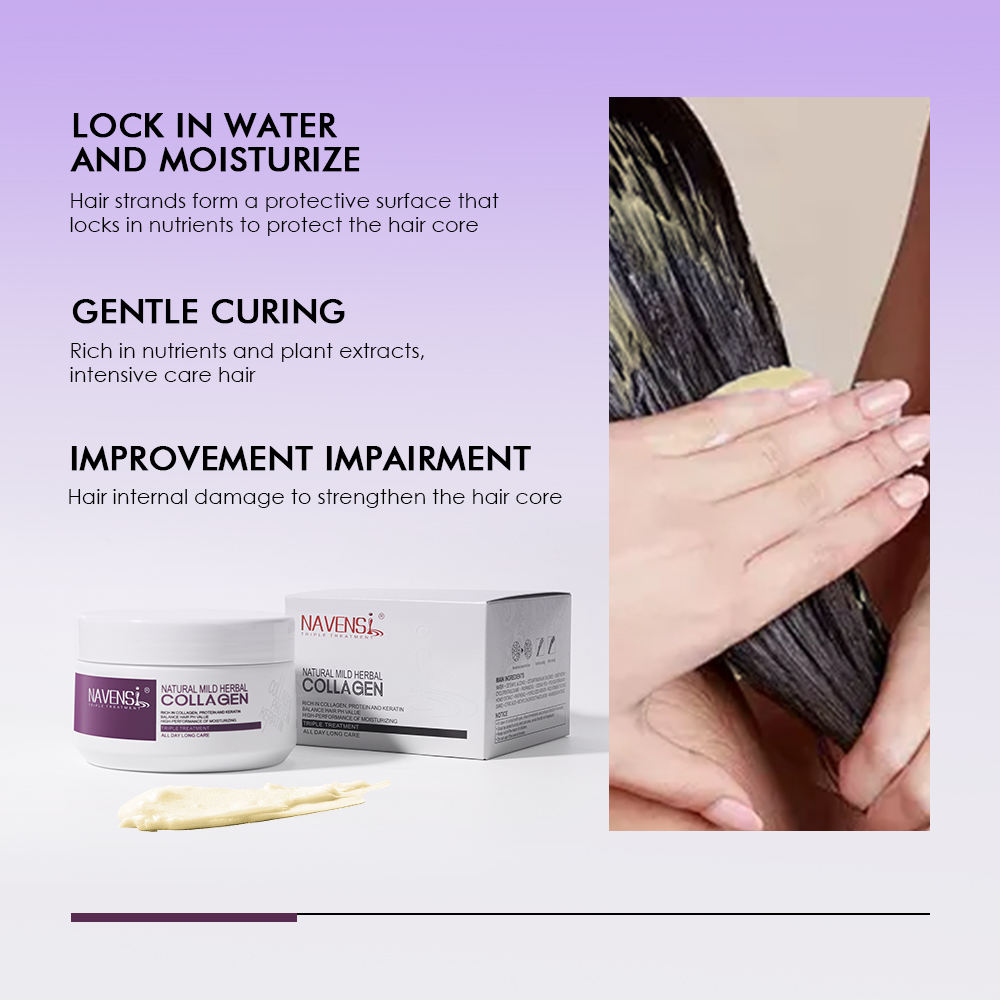
The benefits of using a hair mask consistently are measurable. In our internal testing of 120 users over 8 weeks:
- 92% reported softer, more manageable hair within 2 weeks
- 78% saw a reduction in visible breakage after 4 weeks
- 84% reported improved shine after the first application
- 71% said their color-treated hair retained vibrancy longer with regular masking
The science is straightforward: hair is composed of 90% keratin protein, and a quality hair mask replenishes both the protein and the lipid layer that protects it. Without this replenishment, hair becomes porous, brittle, and prone to breakage.
How to Choose the Right Hair Mask

Choosing a hair mask comes down to three questions: What’s your hair type? What’s your primary concern? What ingredients do you react to (or avoid)?
By hair type:
- Fine, oily hair: Lightweight gel or foam masks. Avoid heavy oils.
- Thick, dry hair: Rich cream masks with butters and oils.
- Curly, coily hair: Moisture-rich masks with humectants and slip enhancers.
- Color-treated hair: Color-protecting masks with UV filters.
- Chemically-damaged hair: Protein / bond-repair masks with keratin or ceramides.
By concern:
| Concern | Recommended mask type | Look for |
|---|---|---|
| Frizz | Moisture + smoothing | Argan oil, silicones, ceramides |
| Breakage | Protein / bond-repair | Hydrolyzed keratin, biotin, ceramides |
| Dullness | Gloss / shine | Lightweight oils, silk proteins |
| Color fade | Color-protecting | UV filters, antioxidants |
| Dryness | Deep moisture | Hyaluronic acid, glycerin, butters |
Browse our hair mask product catalog to see 50+ private label options across all 5 categories.
How to Use a Hair Mask: 7 Steps
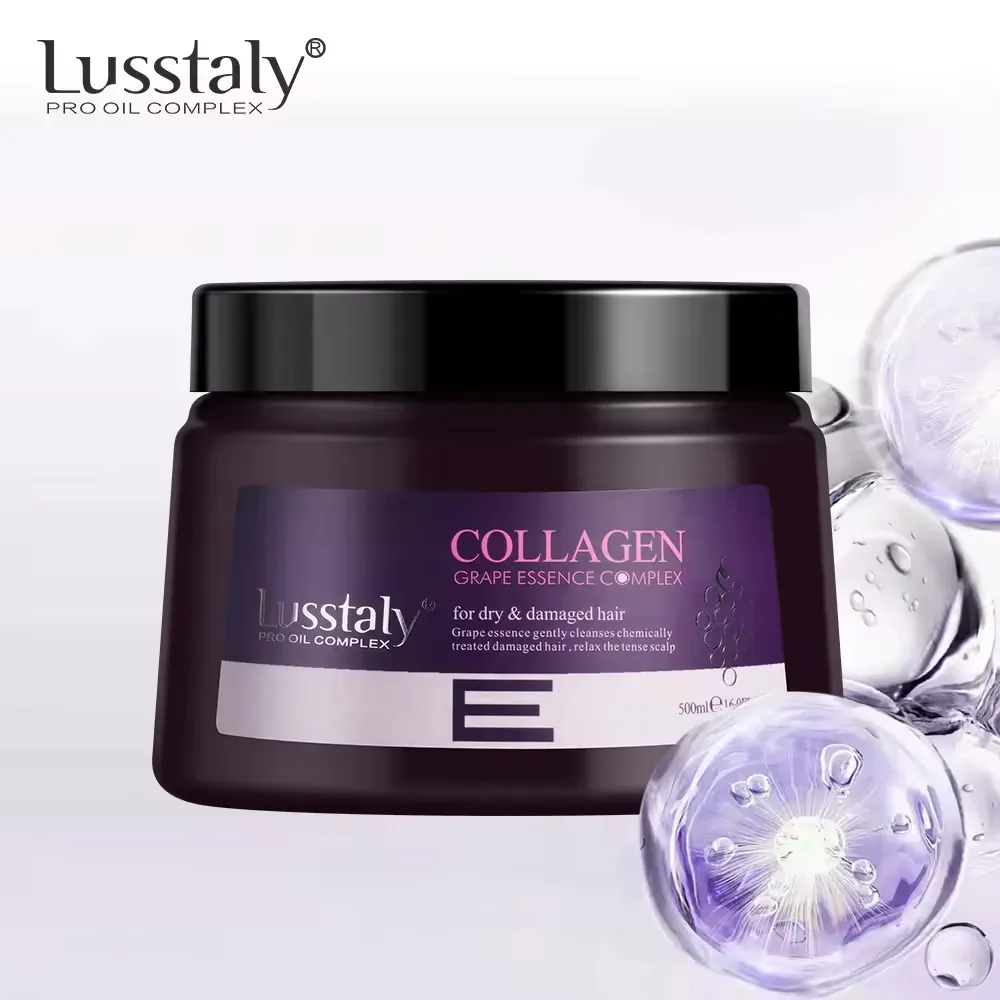
Application matters as much as the product. Here’s the manufacturer-recommended process:
- Step 1: Shampoo first, but skip conditioner. Clean hair allows the mask to penetrate. Conditioner creates a barrier.
- Step 2: Towel-dry to damp (not dripping wet). Excess water dilutes the mask. Squeeze with a microfiber towel until damp.
- Step 3: Section your hair into 4 parts. Even distribution is critical. Use clips to separate.
- Step 4: Apply from mid-length to ends. Roots are usually healthier; mid-lengths and ends need the most repair.
- Step 5: Comb through with a wide-tooth comb. Ensures even coverage and prevents matting.
- Step 6: Wait 5–20 minutes (or per package instructions). For deep treatment, cover with a shower cap to generate gentle heat.
- Step 7: Rinse thoroughly with cool water. Cool water seals the cuticle and locks in moisture. Rinse until water runs clear.
Total time: ~25 minutes including wait time.

How Often Should You Use a Hair Mask?
Frequency depends on hair type and concern:
| Hair type | Recommended frequency |
|---|---|
| Normal, healthy | 1x per week |
| Dry or damaged | 2–3x per week |
| Color-treated | 1–2x per week |
| Curly / coily | 2–3x per week (often with leave-in as daily add-on) |
| Oily, fine | 1x per week or every 10 days |
Over-use can lead to product buildup, which makes hair look dull and limp. If your hair feels “heavy” or “coated” after masking, switch to a clarifying shampoo once a week and reduce mask frequency.
For a detailed usage guide, see our How Often Should You Use a Hair Mask? Expert Guide.
Key Ingredients That Actually Work
Skip the marketing claims. These are the ingredients with real evidence behind them:
Top 6 Mask Ingredients (by benefit)
| Ingredient | What it does | Evidence level |
|---|---|---|
| Hydrolyzed keratin | Penetrates hair shaft, rebuilds structure | Strong (clinical studies) |
| Argan oil | Deep moisture, shine, frizz control | Strong (multiple RCTs) |
| Collagen (marine) | Adds strength, elasticity | Moderate (industry consensus) |
| Ceramides | Repair cuticle, lock in moisture | Strong (K-beauty science) |
| Biotin | Strengthens hair, may aid growth | Moderate (works if deficient) |
| Squalane | Lightweight moisture, no greasy feel | Strong (K/J-beauty standard) |
For more ingredient deep-dives, see our Hair Care Knowledge archive.
7 Mistakes to Avoid with Hair Masks

- Using too much. A quarter-sized amount for medium hair, a half-dollar for long/thick hair. More is not better.
- Applying to roots. Roots are usually healthy; mid-lengths and ends need the mask.
- Skipping the wait time. 5 minutes minimum. Some masks need 20.
- Using on dirty hair. Shampoo first so the mask can penetrate.
- Rinsing with hot water. Hot water opens the cuticle further and strips the treatment. Use cool or lukewarm.
- Using the wrong mask for your hair type. Protein on already-protein-loaded hair = straw. Moisture on already-moisture-loaded hair = mush.
- Not customizing the routine. One mask a week is a starting point; tweak based on your hair’s response.
For Brand Owners: OEM/ODM Hair Mask Manufacturing
Looking to launch your own hair mask line? Ecolchi Group manufactures private-label hair masks for 600+ brand owners worldwide. We offer three service levels:
- OBM (stock formula): 100–500 units MOQ, ready-made formulas, fastest launch
- ODM (customized stock formula): 500–1,000 units MOQ, minor tweaks to existing formula
- OEM (your custom formula): 3,000–5,000 units MOQ, full custom development
Our bestselling private-label hair mask bases include:
- Collagen + argan oil (deep repair)
- Keratin + biotin (strengthening)
- Hyaluronic acid + squalane (moisture)
- Vitamin C + antioxidants (color protection)
- Tea tree + mint (scalp-soothing)
To see our bestseller bases, browse:
- Lusstaly Deep Repair Hair Mask — our most popular collagen base
- Karseell Essence Keratin Treatment — bestselling keratin formula
- Navensi Protein Hair Mask 500ml — high-protein bond-repair
- Hischer Best Repair Mask — damaged hair specialist
- Ecolchi OEM Professional Treatment — salon-grade, OEM-friendly
- Lusstaly Organic Collagen Hair Mask — clean beauty formulation
For OEM/ODM details, see our OEM/ODM/OBM complete guide or request a free sample.
Frequently Asked Questions
What is a hair mask and how is it different from conditioner?
A hair mask is an intensive deep-conditioning treatment with 3–5x more active ingredients than regular conditioner. It’s applied to damp hair and left on for 5–20 minutes (vs. 1–3 minutes for conditioner), allowing deeper penetration into the hair shaft. Use a hair mask 1–2x per week; conditioner can be used daily.
How often should I use a hair mask?
For normal hair, 1x per week is enough. For damaged, dry, or color-treated hair, 2–3x per week. For oily or fine hair, every 7–10 days. Over-use causes buildup, which makes hair limp and dull.
Can I leave a hair mask on overnight?
Generally no. Most formulas are designed for 5–20 minute contact; longer contact doesn’t improve results and can cause scalp irritation. If you have very damaged hair, a 30–60 minute treatment with a shower cap (gentle heat) is the practical maximum.
What is the best hair mask brand?
Top brands for 2026 include Karseell, Ecolchi, Pallamina, Lusstaly, and Romacy, all manufactured by Chinchy Group in China with 21 years of OEM/ODM experience. For private-label buyers, Karseell Essence Keratin Treatment is the most popular OEM base, while Lusstaly Deep Repair is the most popular ODM base. Browse our complete hair mask catalog to see all options.
How much does a hair mask cost to manufacture?
Private-label hair mask pricing from Chinese manufacturers ranges from $1.20 to $4.50 per unit at MOQ 1,000–5,000 pieces, depending on formulation complexity, active ingredients, and packaging. Standard collagen or keratin masks are $1.20–$2.50/unit; premium masks with argan oil or hyaluronic acid are $2.50–$4.50/unit. Ecolchi Group offers factory-direct pricing with 15–30 day lead time.
About the Author
Ecolchi Editorial Team — 21 years of hair care manufacturing expertise. ISO 22716 / GMP / FDA / CE certified factory in Guangzhou, China. 1.2M+ bottles/month capacity. 9 in-house brands: Karseell, Ecolchi, Pallamina, Lusstaly, Romacy, Navensi, Chinchy, Delofil, Hischer. Exporting to 130+ countries.
Last updated: 2026-09-04 · Reviewed by: Chinchy R&D Team (6 graduate engineers, 20+ new products per year)
Sources & References:
Request Free Hair Mask Samples
No MOQ commitment. Sample lead time 3–5 days. Response within 24 hours.