What Is OEM? (Original Equipment Manufacturing)
OEM (Original Equipment Manufacturing) is a business model where a manufacturer produces products that are then branded and sold by another company. In the haircare context, an OEM haircare manufacturer typically:
- Provides stock or semi-custom formulations from their existing product library
- Manufactures products according to the buyer’s brand specifications
- Allows customization of: packaging, labeling, fragrance, bottle shape, and sometimes minor formulation tweaks
- The buyer owns the brand and distribution rights — but the manufacturer may own the underlying formula
OEM in Practice
You approach an OEM haircare manufacturer and say: “I want to sell your keratin hair mask formula under my brand. I’ll use my own logo, my own packaging design, and I’ll set my own pricing.”
The manufacturer says: “Great. Here’s our stock formula, here are our packaging options, and here are the customization limits.”
What you get: A proven product, fast production, limited customization.
What you give up: Full formula exclusivity.
What Is ODM? (Original Design Manufacturing)
ODM (Original Design Manufacturing) is a more comprehensive service where the manufacturer is involved in the design, development, and production of products. An ODM haircare manufacturer typically:
- Offers custom formulation development from scratch
- Provides packaging design and branding services
- Develops products based on your specific requirements (target market, ingredients, claims, price point)
- May include regulatory compliance support for target export markets
- The resulting product is typically exclusive to your brand
ODM in Practice
You approach an ODM haircare manufacturer and say: “I want to launch a premium sulfate-free shampoo line for the North American market. My target customer is women aged 25–40 with color-treated hair. I want a unique botanical formulation with a patented delivery system, and I need packaging that looks luxury but costs under $8 per unit at 10,000 units.”
The manufacturer assigns an R&D team, presents concept formulations, develops custom packaging, handles regulatory documentation, and delivers a turnkey product ready for your brand.
What you get: Fully customized, differentiated, exclusive product.
What you give up: More time and potentially more budget.
OEM vs ODM: Side-by-Side Comparison
When to Choose OEM
✅ Choose OEM if You’re a Startup Testing the Market
If you’re launching a new brand and want to validate demand before committing significant capital, OEM is the smart choice. You can:
- Test 2–3 products quickly (4–8 weeks)
- Keep upfront investment low ($5,000–$15,000 for an initial order)
- Iterate based on real customer feedback
- Scale up once you have proven sales
✅ Choose OEM if You Have Limited Resources
Not every brand founder is a cosmetic chemist—and that’s fine. OEM lets you leverage existing proven formulations without needing in-house R&D expertise. You focus on branding, marketing, and sales; the manufacturer handles the science.
✅ Choose OEM for Faster Time to Market
If you need to launch within 6–8 weeks (seasonal product, trade show, limited-time campaign), OEM is the only viable option. Custom ODM development takes 3–6 months minimum.
✅ Choose OEM for Commodity Products
If you’re selling mainstream, well-understood product categories (basic shampoo, standard conditioner), OEM makes perfect sense. There’s no need to reinvent the wheel for a product category with proven, effective stock formulas.
When to Choose ODM
✅ Choose ODM for Premium Brand Positioning
If you want to command premium pricing and build a luxury or niche brand, ODM is essential. Exclusive formulations, custom ingredients, and bespoke packaging create real differentiation that justifies higher price points.
✅ Choose ODM if You Have a Unique Concept
If you have a specific product vision that doesn’t exist in any stock catalog—say, a hair serum combining specific botanical extracts at specific concentrations—ODM is how you bring it to life.
✅ Choose ODM for Regulatory Certainty
If you’re targeting heavily regulated markets (EU, Japan, South Korea), ODM manufacturers with export experience can navigate the regulatory landscape on your behalf—handling documentation, safety assessments, and compliance certifications.
✅ Choose ODM for Long-Term Competitive Advantage
If you’re building a brand to last 10+ years, ODM’s formula exclusivity protects your competitive position. A competitor using the same OEM manufacturer can copy your product; they cannot copy your custom-developed formulation.
What About OBM? (Own Brand Manufacturing)
You may also encounter the term OBM (Own Brand Manufacturing). This is when a manufacturer:
- Owns multiple brands (like Ecolchi, Karseell, Pallamina, Delofil)
- Sells these brands to distributors and agents in different markets
- The distributor gets exclusive rights to sell the manufacturer’s brand in their territory
OBM is different from OEM and ODM because you’re buying into an existing brand rather than building your own.
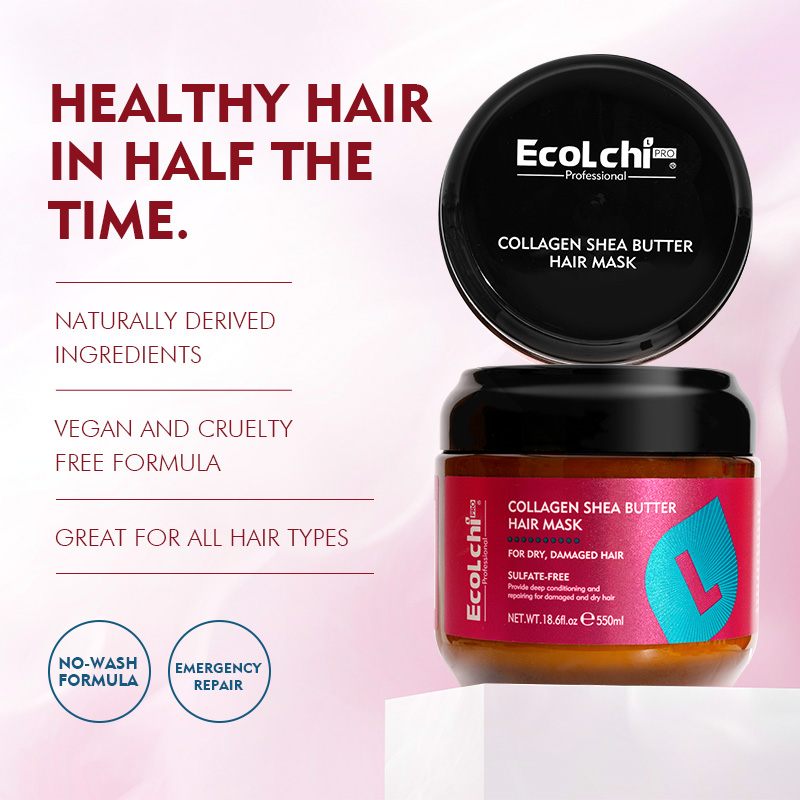
Ecolchi, for example, offers OBM partnerships—allowing distributors to represent Ecolchi products exclusively in their country, benefiting from an established brand, proven products, and marketing support.
Real-World Example: Ecolchi’s Manufacturing Services
Ecolchi, produced by Guangzhou Chinchy Cosmetics Co., Ltd., demonstrates the flexibility that modern haircare OEM/ODM/OBM manufacturers offer:
OEM Services
- Choose from 89+ stock formulations across hair masks, shampoos, conditioners, serums, and styling products
- Customize packaging, labeling, and branding
- MOQs as low as 500 units for selected products
- Fast 30–45 day production timelines
ODM Services
- Custom formulation development with dedicated R&D team
- Full packaging and graphic design support
- Regulatory compliance documentation for EU, US, and Asian markets
- Exclusive formulations for premium brand positioning
OBM Services
- Partnership opportunities for exclusive regional distribution
- Use of established Ecolchi brand name and marketing materials
- Product portfolio already exported to 100+ countries
- Joint marketing support including videos, images, and promotional materials

How to Choose: A Decision Framework
Ask yourself these questions:
1. What’s your timeline?
- < 2 months → OEM only
- 2–6 months → OEM or ODM (depending on complexity)
- 6+ months → ODM preferred
2. What’s your budget?
- < $10,000 initial → OEM
- $10,000–$50,000 → OEM or entry-level ODM
- $50,000+ → ODM for full customization
3. How differentiated does your product need to be?
- Minimal (competing on price/distribution) → OEM
- Moderate (brand experience matters) → OEM with strong branding
- High (unique concept, premium positioning) → ODM
4. How large is your initial order?
- < 5,000 units → OEM
- 5,000–20,000 units → Either, depending on needs
- 20,000+ units → ODM becomes more cost-effective
5. What’s your target market?
- Domestic/simple market → OEM
- Export to regulated markets → ODM with compliance support
- Premium retail shelves → ODM

Common Mistakes to Avoid
Mistake #1: Choosing OEM When You Need ODM
Don’t try to squeeze a premium brand concept into stock OEM formulas if your competitors are doing the same thing. If everyone uses the same stock formula, the only differentiator is price—and that race to the bottom destroys margins.
Mistake #2: Choosing ODM When You Should Start with OEM
Don’t over-invest in custom formulation if you haven’t validated that people want your product. Start with OEM, prove demand, then invest in ODM for the next phase.
Mistake #3: Not Negotiating Exclusivity in OEM
If you go the OEM route, ask whether you can get regional exclusivity for your chosen formula—preventing the manufacturer from selling the same formula to direct competitors in your territory.
Mistake #4: Ignoring Manufacturing Certifications
Whether OEM or ODM, verify that your manufacturer holds GMP, ISO 22716, and ISA 22716 certifications. These aren’t optional—they’re essential for international trade and regulatory compliance.
Final Verdict: OEM vs ODM
Choose OEM if: You’re launching a new brand, need to move fast, have limited budget, and can compete on brand positioning and distribution rather than product uniqueness.
Choose ODM if: You have a specific product vision, need genuine differentiation, target premium markets, and have the budget and timeline for custom development.
Consider OBM if: You want to fast-track market entry by representing an established brand with proven demand.
The best approach for most startups: Start with OEM to validate your concept, prove demand, and generate revenue—then invest in ODM for your hero products once you have the capital and market insight to differentiate effectively.
Ready to explore OEM/ODM/OBM partnerships for your haircare brand? Ecolchi’s parent company offers all three manufacturing models—with 20+ years of experience, GMP/ISO/ISA certifications, and a track record of delivering quality products to 100+ countries. Connect with their team at ecolchifactory.com →