The hair care manufacturing process takes a product from a chemist’s formula to a finished, bottled, and shelf-ready item in 7 distinct stages. At Chinchy Group, we run this exact 7-stage hair care manufacturing process for over 1200,000 bottles every month, serving brands in 130+ countries from our 25,000+ sqm facility in Guangzhou. Whether you choose OEM, ODM, or OBM, these 7 stages apply — and skipping any of them is how products fail in market.
Quick answer: The hair care manufacturing process has 7 stages: (1) formula development and sampling, (2) stability and compatibility testing, (3) raw material sourcing, (4) bulk production and filling, (5) quality control and lab testing, (6) packaging and labeling, and (7) warehousing and export. End-to-end, ODM with a pre-validated formula takes 10-24 weeks; a custom OEM formula takes 18-34 weeks.
1. What is the Hair Care Manufacturing Process?
The hair care manufacturing process is the end-to-end workflow that turns a hair care formula — for a shampoo, conditioner, hair mask, hair oil, or styling product — into a finished, retail-ready product. It covers everything from the chemist’s first sample to the container that arrives at your warehouse, and it includes the testing, sourcing, and documentation that regulators in your target market require.
For most hair care products, the hair care manufacturing process follows the same 7 stages regardless of whether you’re doing OEM, ODM, or OBM. The difference between the three models is who brings the formula — not which stages you run. To compare the three models in detail, see our OEM vs ODM guide for hair care brands and our complete OEM hair products guide.
2. Why a Structured 7-Stage Process Matters
Skipping or rushing any stage of the hair care manufacturing process is the single biggest reason hair care brands fail post-launch. Common consequences include:
- Formula instability — separation, color change, or microbial growth within weeks of the product reaching consumers.
- Regulatory rejection — products held at customs for missing certifications or incorrect labeling.
- Costly reformulation — a failed batch of 50,000 bottles costs the same to scrap whether you caught the problem at week 4 or week 40.
According to the Personal Care Products Council, the global cosmetics and personal care industry loses an estimated 5-8% of revenue annually to product recalls and reformulations (Personal Care Products Council, 2024). Most of these losses trace back to compressed or incomplete manufacturing processes.
3. The 7 Stages of the Hair Care Manufacturing Process
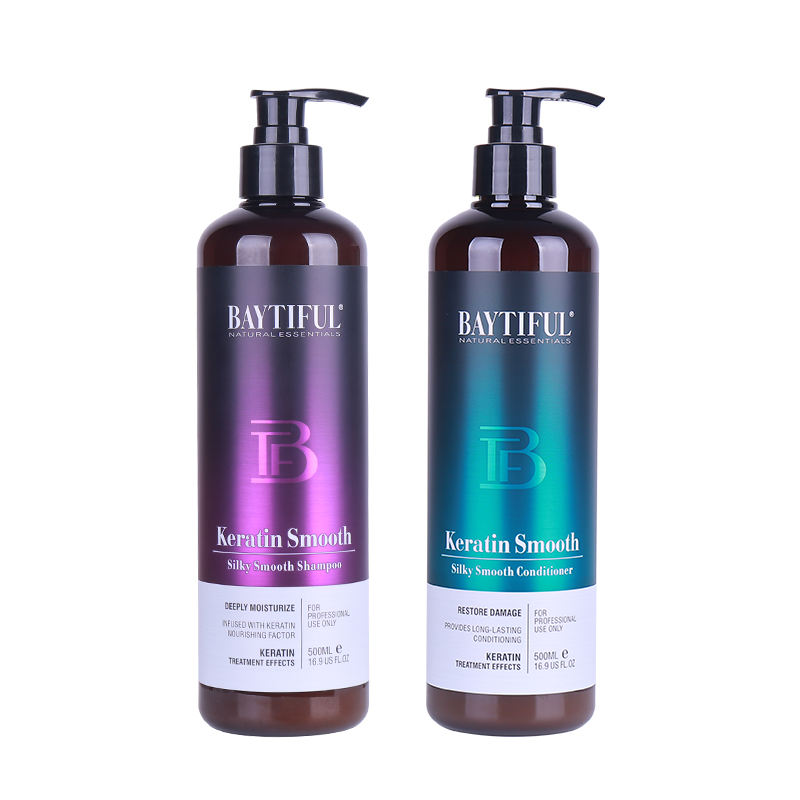
Stage 1: Formula Development and Sampling (2-6 weeks)
The hair care manufacturing process always starts with a formula. Two paths are common:
- OEM (Original Equipment Manufacturer): You bring the formula, or hire a lab to develop one. Our chemists then validate it on our equipment.
- ODM (Original Design Manufacturer): You pick from our catalog of 200+ pre-developed formulas — hair masks, hair oils, shampoos, conditioners — and we customize fragrance, color, viscosity, and packaging.
Our team of 30+ chemists and quality engineers develops a lab sample, runs initial stability tests, and produces a 100-500g sample for your review. Typical lead time: 2-4 weeks for ODM, 4-8 weeks for a brand-new OEM formula.
What to ask your manufacturer at this stage: Request the full INCI ingredient list, pH range, preservative system, and active ingredient concentration. If they can’t or won’t share these, walk away.
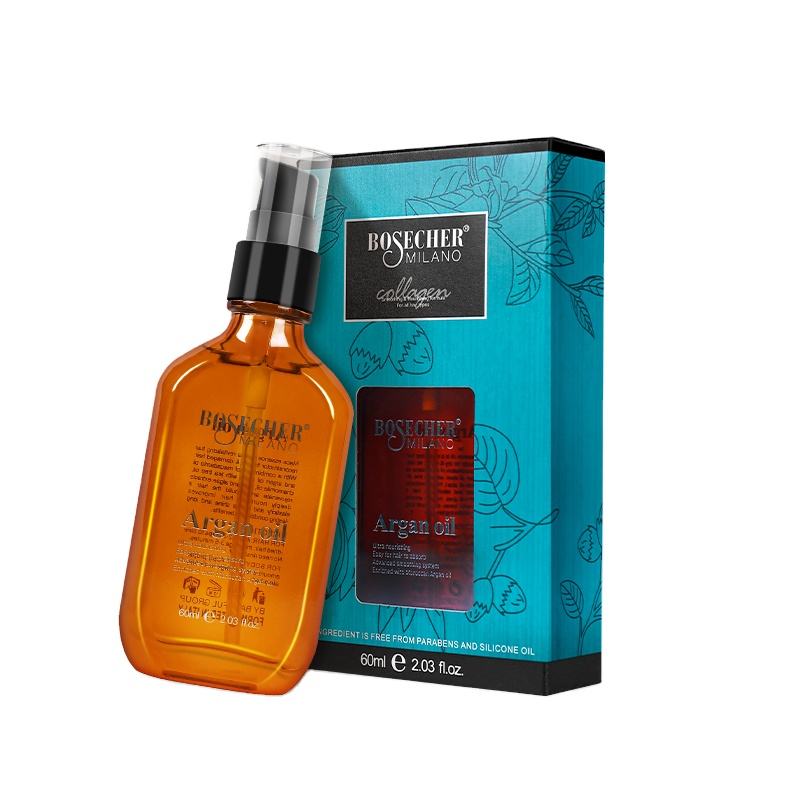
Stage 2: Stability and Compatibility Testing (4-12 weeks)
Once the formula is locked, it has to prove it can survive real-world conditions. We run four parallel tests during this stage of the hair care manufacturing process:
- Accelerated stability testing — formula stored at 40°C / 104°F for 3-6 months to simulate 12-18 months of shelf life.
- Freeze-thaw cycling — to confirm the formula holds together in cold shipping conditions.
- Packaging compatibility — to ensure the formula doesn’t react with the bottle, pump, or jar material.
- Microbiological challenge testing — confirms the preservative system works against bacteria, yeast, and mold.
Total time: 4-12 weeks, depending on the formula complexity and target market certifications (FDA, CE, etc.).
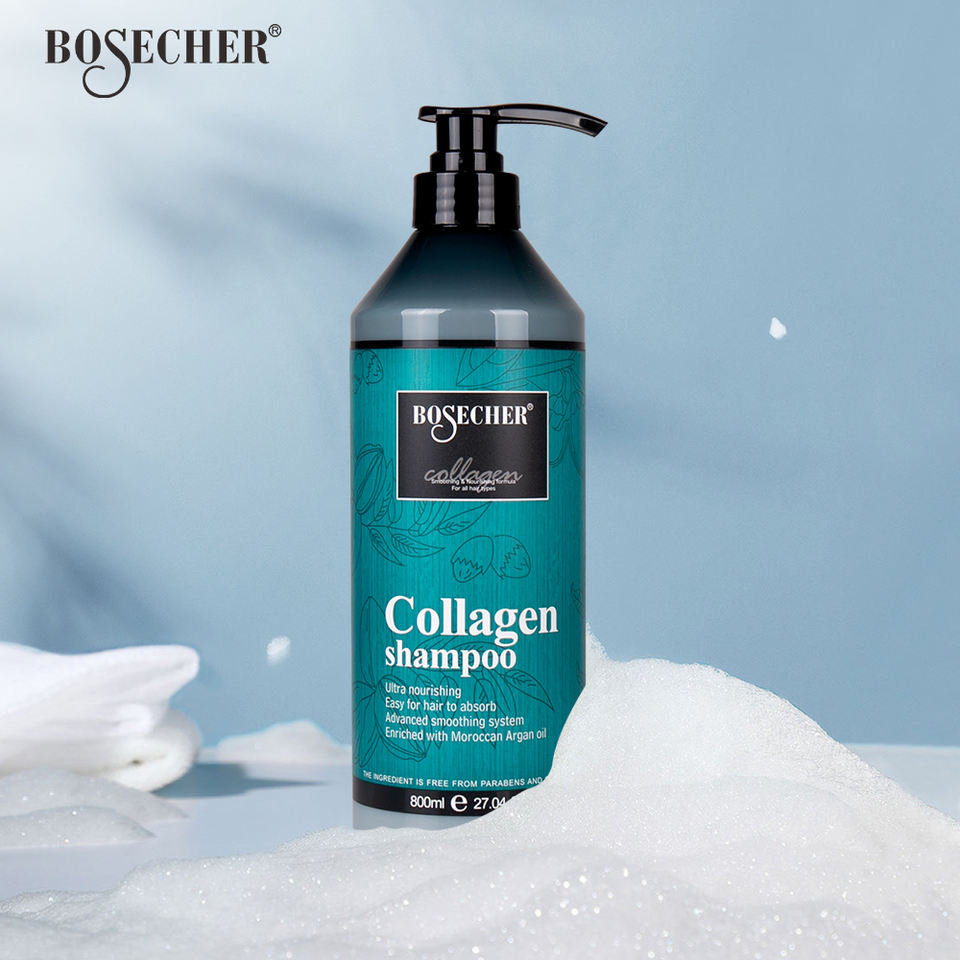
Stage 3: Raw Material Sourcing (1-3 weeks)
With the formula approved, procurement sources every ingredient. For a typical hair mask, that’s 15-25 individual raw materials: surfactants, emollients, active ingredients (collagen hair masks feature hydrolyzed collagen at 1-5%), preservatives, fragrance, colorants, and water.
At Chinchy Group, we maintain long-term relationships with 200+ certified suppliers across China, Europe, and the Americas. This matters because:
- Quality consistency: same supplier for same ingredient means same color, scent, and performance batch after batch.
- Regulatory compliance: every shipment comes with a Certificate of Analysis (COA) and a Safety Data Sheet (SDS).
- Cost stability: long-term contracts protect you from commodity price swings.
Typical lead time: 1-3 weeks for standard raw materials, longer (4-6 weeks) for specialty or imported ingredients.
Stage 4: Bulk Production and Filling (1-3 weeks)
Now the formula is mixed at scale. The process depends on the product type:
- Hair masks and conditioners: water phase heated to 75-80°C, oil phase heated separately, then emulsified under high-shear mixing.
- Shampoos: surfactant blends mixed with water, pH adjusted, viscosity built, preserved.
- Hair oils: carrier oils and active ingredients blended at room temperature, fragrance added last.
After mixing, the bulk product is held in stainless steel tanks (we have 30+ tanks ranging from 500L to 5,000L) and quality-checked before filling. Filling is where the product meets the package: bottles, jars, pumps, tubes, all filled on automated or semi-automated lines.
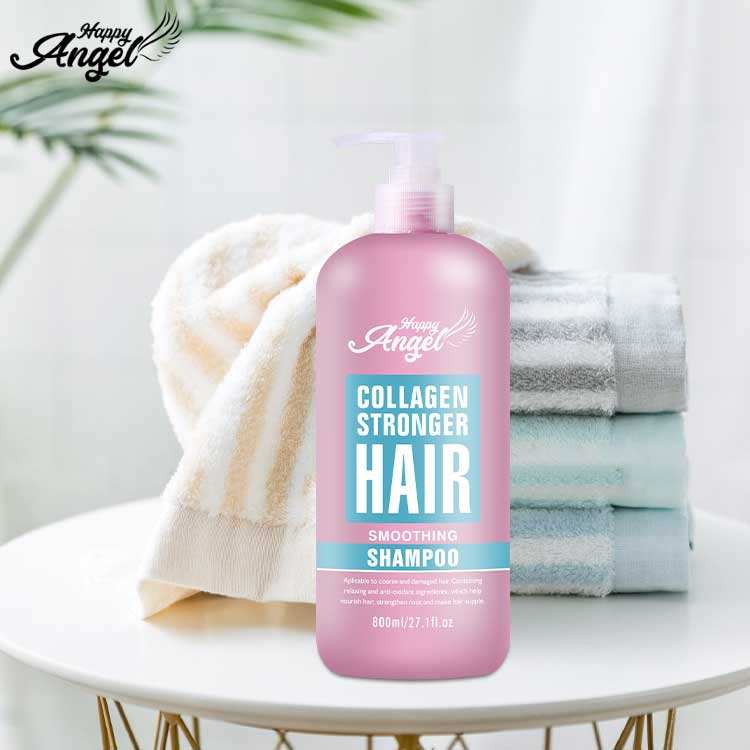
Our monthly capacity: 200,000+ bottles across hair masks, hair oils, shampoos, and conditioners — all from one facility.
Stage 5: Quality Control and Lab Testing (parallel)
QC runs alongside production, not after it. We test every batch against a 12-point checklist:
- Appearance (color, clarity, texture)
- pH (must match spec within ±0.3)
- Viscosity (must match reference sample)
- Active ingredient concentration (e.g., hydrolyzed collagen must be 1-5% for a collagen hair mask claim)
- Microbial count (must be below 100 CFU/g)
- Heavy metals (lead, arsenic, mercury, cadmium — all below regulatory limits)
- Fragrance match (olfactory comparison vs. reference standard)
- Packaging integrity (no leaks, no defects)
- Weight check (must meet label claim within tolerance)
- Label accuracy (ingredients, batch number, manufacturing date, expiration date)
- Seal strength (for pumps and tubes)
- Stability sample retention (we keep 1-year retention samples of every batch)
Any batch that fails any of these tests is rejected and reworked or discarded. We don’t ship failing batches.

Stage 6: Packaging, Labeling, and Cartoning (1-2 weeks)
Once the product passes QC, it moves to packaging. The hair care manufacturing process at this stage includes:
- Individual units are labeled (front label, back label, batch code, expiration date)
- Secondary packaging (boxes, sleeves, wrapping) is added
- Tertiary packaging (master cartons, palletizing) prepares the shipment for export
We support a wide range of packaging options — bottles (PET, HDPE, glass), jars (acrylic, glass, biodegradable PLA), pumps, droppers, tubes, sachets — and can source custom molds for true private-label differentiation. If you want to see what a finished product looks like, browse our hair mask catalog or our hair oil line.

Stage 7: Warehousing, Export, and Shipping (1-6 weeks)
The final stage of the hair care manufacturing process is getting the product to your warehouse or to your customer’s door. We support three main models:
- FOB (Free on Board): We deliver to the port, you take over shipping. Most common for established brands.
- DDP (Delivered Duty Paid): We handle everything from factory to your warehouse, including customs. Best for new brands.
- Warehousing + drop-ship: For high-volume clients, we hold inventory in our 5,000+ sqm bonded warehouse and ship on demand.
Lead times: 1-2 weeks by air freight, 3-6 weeks by sea. We ship to 130+ countries and have active distribution in 30+ markets. For a step-by-step look at how this works in practice, watch our factory video below.
Watch: Inside Our Hair Care Manufacturing Facility
4. Total Timeline: What to Expect for Your First Production Run
Here’s what a realistic first production run looks like end-to-end for the hair care manufacturing process:
| Stage | ODM (Pre-developed formula) | OEM (Custom formula) |
|---|---|---|
| 1. Formula and Sampling | 2-4 weeks | 4-8 weeks |
| 2. Stability Testing | 4-8 weeks | 8-12 weeks |
| 3. Raw Material Sourcing | 1-2 weeks | 2-3 weeks |
| 4. Bulk Production | 1-2 weeks | 2-3 weeks |
| 5. QC and Lab Testing | Parallel | Parallel |
| 6. Packaging and Labeling | 1-2 weeks | 1-2 weeks |
| 7. Shipping and Export | 1-6 weeks | 1-6 weeks |
| Total | 10-24 weeks | 18-34 weeks |
Most new brands: 3-4 months from agreement to first shipment if you’re going ODM with a pre-validated formula.
5. Frequently Asked Questions (FAQ)
1. How long does the hair care manufacturing process take end-to-end?
For ODM with a pre-developed formula, expect 10-24 weeks from agreement to first shipment, depending on whether the formula needs minor customization and how fast you can finalize packaging. For OEM with a brand-new formula, expect 18-34 weeks. The longest stage is almost always stability testing (4-12 weeks) — and it can’t be safely skipped.
2. What’s the difference between OEM, ODM, and OBM in hair care manufacturing?
OEM means you bring the formula and the manufacturer produces it. ODM means the manufacturer provides a pre-developed formula from a catalog that you brand as your own. OBM (Original Brand Manufacturer) is the most turnkey option: the manufacturer gives you a complete brand package — formula, packaging design, brand story, and marketing assets — ready to launch. OBM is fastest (6-12 weeks), OEM takes longest (4-6 months). For a deep comparison, see our OEM vs ODM guide.
3. What is the minimum order quantity (MOQ) for hair care manufacturing?
MOQs vary by model. ODM typically starts at 500-1,000 pieces per SKU because the formula is already validated. OEM usually requires 3,000-5,000 pieces per SKU because production requires new setup and longer run times. OBM is the most flexible — some manufacturers (including us) accept as low as 300 pieces for turnkey packages.
4. What are the most common mistakes brands make in the manufacturing process?
The top 5 mistakes we see: (1) skipping stability testing to save time, (2) choosing OEM too early before validating the market, (3) underestimating packaging lead time, (4) not budgeting for compliance testing in your target market, and (5) treating the manufacturer as a vendor rather than a partner. The brands that grow fastest treat their manufacturer as an extension of their team.
5. How do I choose a reliable hair care manufacturer?
Look for ISO 22716 certification, FDA registration, and a documented quality control process. Request samples for lab testing, ask for a list of past clients, and visit the factory if possible. Avoid any manufacturer that asks for 100% payment upfront or refuses third-party audits. We’ve published a detailed guide on how to find a hair care manufacturer in China that walks through the 7 critical factors.
6. What’s the difference between a hair mask and a hair treatment in the manufacturing process?
The hair care manufacturing process is largely the same for both, but masks typically have higher oil/butter content (shea butter, cocoa butter) and longer leave-on times, while treatments tend to be lighter, more concentrated, and often applied to specific areas. To compare the two in detail, see our hair mask vs conditioner guide.
6. Industry Data and Sources
- Personal Care Products Council. (2024). Annual Industry Report. Retrieved from personalcarecouncil.org
- ISO 22716:2007. Cosmetics — Good Manufacturing Practices (GMP) — Guidelines on Good Manufacturing Practices. International Organization for Standardization.
- FDA. (2023). Cosmetic Good Manufacturing Practices: Draft Guidance for Industry. U.S. Food and Drug Administration.
- Euromonitor International. (2024). Global Beauty and Personal Care 2024 Edition.
7. Want to See This Process in Action?
At Chinchy Group, we run this exact hair care manufacturing process every day across 200,000+ bottles per month, serving brands in 130+ countries. Whether you need OEM, ODM, or OBM services, our team of 30+ chemists, 200+ certified suppliers, and 25,000+ sqm manufacturing facility can support your launch from formula to shelf.
👉 Request a quote or browse our hair mask catalog to see our ODM and OEM capabilities.
📩 Or contact us directly at manager@chinchy.com to discuss your project — we read every inquiry and respond within 24 hours.
About the author: The Ecolchi Factory Team brings 21 years of hair care manufacturing experience from Chinchy Group, a Guangzhou-based OEM/ODM/OBM producer serving 130+ countries. We’ve supported first-time founders and 20-year beauty houses, with full ISO 22716 / GMP / FDA / CE certification and a 25,000+ sqm facility producing 200,000+ bottles every month.