OEM vs ODM 2026: Complete Guide for Hair Care Brand Owners
- Understanding oem vs odm 2026 is essential for hair care brand owners.
- This guide covers practical aspects for sourcing and product decisions.
- Ecolchi Group is a 21-year manufacturer with ISO 22716, FDA, CE, GMP certifications, exporting to 130+ countries.
The hair care industry is full of specialized terms and concepts. oem vs odm 2026 is one of the most important for anyone launching or scaling a hair care brand.
This guide covers what oem vs odm 2026 means, how it affects your business, and how to evaluate it when choosing a manufacturing partner or making product decisions.
By the end, you’ll understand how to navigate this topic confidently and use it to grow your brand.
Table of Contents
- The 3 Manufacturing Models in 2026
- Detailed Comparison (2026 Pricing)
- When to Use Each Model
- Real 2026 Case Studies
- Decision Tree: Which Model Is Right for You?
- Frequently Asked Questions
The 3 Manufacturing Models in 2026
OEM, ODM, and OBM are the three models. OEM is full custom (brand owns formula). ODM is manufacturer formula with tweaks. OBM is ready-made products.
Detailed Comparison (2026 Pricing)
OEM: setup $3K–$15K, MOQ 3K–5K, lead time 45–90 days, per-unit $1.80–$4.50. ODM: setup $0–$1.5K, MOQ 500–2K, lead time 20–45 days, per-unit $1.20–$3.00. OBM: setup $0, MOQ 100–500, lead time 7–21 days, per-unit $0.80–$2.00.
| Factor | OEM | ODM | OBM |
|---|---|---|---|
| Setup cost | $3K–$15K | $0–$1.5K | $0 |
| MOQ | 3K–5K | 500–2K | 100–500 |
| Lead time | 45–90 days | 20–45 days | 7–21 days |
| Per-unit (500ml) | $1.80–$4.50 | $1.20–$3.00 | $0.80–$2.00 |
| Margin potential | 45–55% | 55–65% | 60–70% |
When to Use Each Model
OEM: premium positioning, patents, regulatory claims. ODM: fast launch, market validation, multi-SKU. OBM: e-commerce testing, ultra-fast launch, low capital.

Real 2026 Case Studies
Rooted (US, 2025): Full OEM, 5K units, $3.20/unit, $420K Year 1. Lumière (EU, 2024): ODM with fragrance customization, 3K units, $1.80/unit, $280K Year 1. Silk Route (US, 2024): OBM, 100 units of 2 products for testing, $19 retail, $95K Year 1.
Decision Tree: Which Model Is Right for You?
Have a unique formula or regulatory claim? OEM. Need a specific tweak to stock formula? ODM. Testing multiple products fast? OBM. Under $5K capital? OBM or low-volume ODM.
Related Guides from Ecolchi
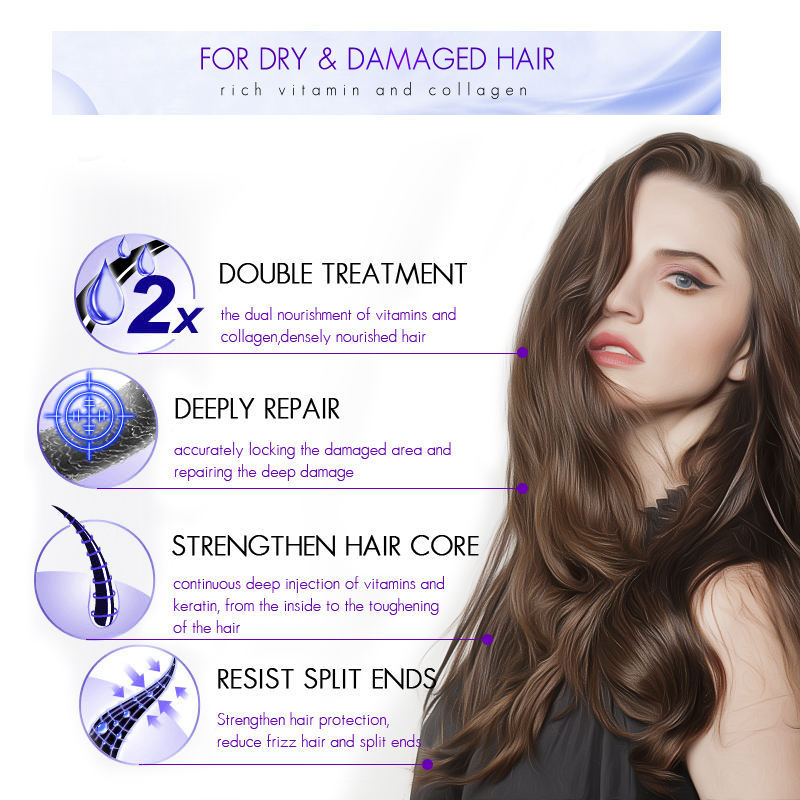
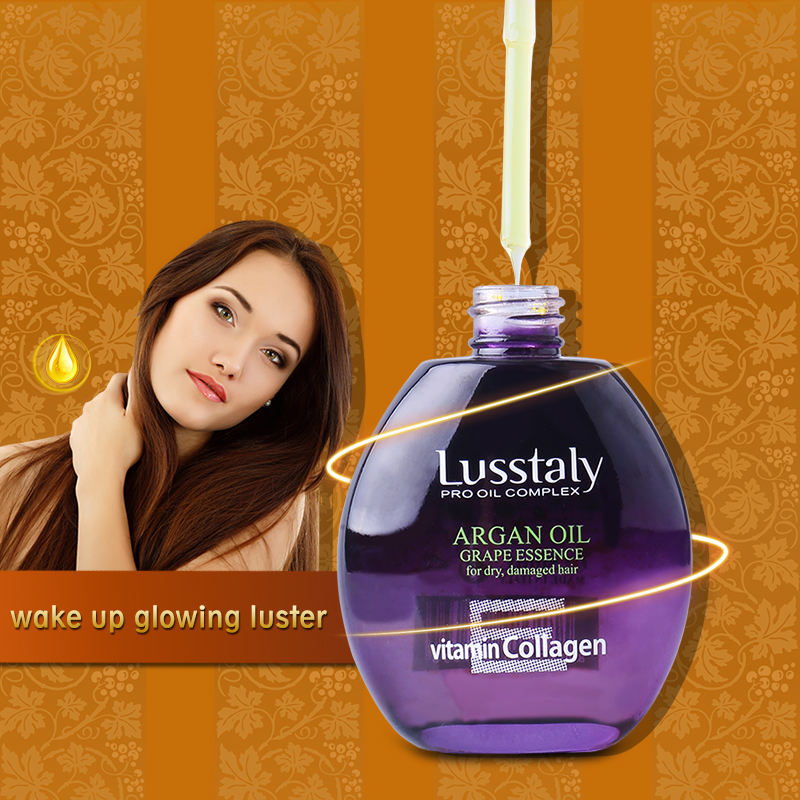
- Lusstaly Organic Collagen Hair Mask
- Karseell Essence Keratin Treatment
- Hischer Best Repair Damaged Hair Mask
- Ecolchi OEM Professional Hair Treatment
- Lusstaly Deep Repair Hair Mask
OBM: The Third Option Most Founders Miss
OBM (Original Brand Manufacturer) is the often-overlooked third option between OEM and ODM. OBM means the factory has its own consumer brand, and you can buy products from that brand and re-sell under your own label. OBM is the lowest-risk, lowest-cost path to market.
How OBM works: you pick a successful product from a factory’s existing brand portfolio, choose your packaging, and put your label on it. The factory has already invested in R&D, market testing, and quality control. You benefit from proven product-market fit at near-ODM pricing.
OBM economics: 100-500 unit MOQ, $1.20-$2.50/unit FOB, 7-15 days lead time. Compared to ODM (500-3000 unit MOQ, 15-30 days) and OEM (3000+ MOQ, 30-60 days), OBM is the fastest path.
OBM trade-off: less brand differentiation. Since other companies can sell the same product under different labels, OBM brands compete on marketing, packaging, and customer experience rather than formulation. Successful OBM brands invest heavily in branding, social media, and customer loyalty.

When to Choose OEM, ODM, or OBM: Decision Matrix
Choose OEM when: you have a unique formula, IP that must be protected, specific performance requirements, or want full control over ingredients. Best for: established brands, brands with in-house R&D, brands entering premium markets.
Choose ODM when: you want a unique-but-proven formula, faster time-to-market, lower R&D cost, and don’t need proprietary IP. Best for: indie brands, brands testing new categories, brands with limited R&D budget.
Choose OBM when: speed-to-market is critical, you have no R&D capability, you’re testing a new market, or you’re a service-based brand (salon, spa) extending into retail. Best for: first-time founders, side projects, e-commerce sellers testing demand.
Cost vs. time trade-off: OBM is fastest and cheapest; OEM is slowest and most expensive; ODM is the middle ground. For most first-time founders in 2026, we recommend starting with ODM or OBM and graduating to OEM once revenue exceeds $500K/year.
See our private label guide and MOQ explanation for context.
Real Cost Comparison: OEM vs ODM vs OBM
OBM (Original Brand Manufacturer) – 100-500 unit MOQ. Unit cost: $1.20-$2.50 FOB. Lead time: 7-15 days. Total upfront investment: $500-$2,000. Best for: testing demand, first-time founders, low-risk entry.
ODM (Original Design Manufacturer) – 500-3000 unit MOQ. Unit cost: $1.50-$3.00 FOB. Lead time: 15-30 days. Total upfront investment: $1,500-$10,000. Best for: established indie brands, faster time-to-market, proven formulas.
OEM (Original Equipment Manufacturer) – 3000+ unit MOQ. Unit cost: $2.00-$5.00 FOB. Lead time: 30-60 days. Total upfront investment: $10,000-$50,000+. Best for: brands with proprietary formulas, premium positioning, large capital.
The crossover point: at 3,000+ units, OEM cost per unit often matches ODM but with full IP ownership. The decision should be based on capital availability, time-to-market pressure, and brand strategy (commodity vs premium).
For more, see our private label guide and 90-day brand plan for context.
Decision Tree: How to Choose OEM vs ODM vs OBM
Start here: Do you have a specific formula you need made?
Yes, with proprietary ingredients or specific performance requirements: OEM. Plan for 30-60 days lead time, 3,000+ unit MOQ, $10K+ upfront.
Yes, but flexible on minor details: ODM. The factory may suggest minor modifications. 15-30 days, 500-3,000 unit MOQ, $1.5K-$10K upfront.
No, I want a proven formula: OBM. Pick from factory’s existing brand. 7-15 days, 100-500 unit MOQ, $500-$2K upfront.
Now consider: How much capital do you have?
Under $10K: OBM only. Test the market before committing more capital.
$10K-$50K: ODM with 1-3 SKUs. Most first-time founders land here.
$50K-$200K: ODM with multiple SKUs, or OEM with a single hero product.
Over $200K: Full OEM line with 5-10 SKUs. Build a brand around proprietary IP.
See our private label guide and MOQ explanation for context.
Frequently Asked Questions
What is the difference between OEM and ODM in 2026?
OEM: brand owns the formula. ODM: manufacturer owns the formula, brand tweaks. Both are valid; choice depends on goals.
Which is cheaper: OEM or ODM?
ODM is cheaper upfront ($0–$1,500 setup vs $3,000–$15,000 for OEM) and has lower per-unit cost at low volumes.
Can I switch from ODM to OEM later?
Yes. Many brands start with ODM to validate, then transition to OEM at $500K+ annual revenue.
What is the best model for first-time brand owners?
ODM is the most popular for first-time brands. It balances cost, speed, and differentiation.
Is OBM a good option for testing?
Yes — OBM (stock formula) is the fastest and cheapest way to test multiple products.
About the Author
Ecolchi Editorial Team — 21 years of hair care manufacturing expertise. ISO 22716 / GMP / FDA / CE certified factory in Guangzhou, China. 1.2M+ bottles/month capacity. 9 in-house brands: Karseell, Ecolchi, Pallamina, Lusstaly, Romacy, Navensi, Chinchy, Delofil, Hischer. Exporting to 130+ countries.
Reviewed by: Chinchy R&D Team (6 graduate engineers, 20+ new products per year)
Sources & References:
Request Free Oem Vs Odm 2026 Consultation
No MOQ commitment. Sample lead time 3–5 days. Response within 24 hours.