CE Marking for Cosmetics: EU Compliance Guide (2026)
- Understanding ce marking cosmetics is essential for hair care brand owners.
- This guide covers practical aspects for sourcing and product decisions.
- Ecolchi Group is a 21-year manufacturer with ISO 22716, FDA, CE, GMP certifications, exporting to 130+ countries.
The hair care industry is full of specialized terms and concepts. ce marking cosmetics is one of the most important for anyone launching or scaling a hair care brand.
This guide covers what ce marking cosmetics means, how it affects your business, and how to evaluate it when choosing a manufacturing partner or making product decisions.
By the end, you’ll understand how to navigate this topic confidently and use it to grow your brand.
Table of Contents
- What Is CE Marking for Cosmetics?
- Which Hair Care Products Need CE Marking?
- How Much Does CE Marking Cost?
- CE Marking vs EU CPNP Notification
- Do I Need CE Marking to Sell in the EU?
- Frequently Asked Questions
What Is CE Marking for Cosmetics?
CE marking is a European conformity mark required for some cosmetic products sold in the EU. It indicates the product meets EU safety, health, and environmental requirements.

Which Hair Care Products Need CE Marking?
Sunscreens, certain hair dyes, products with specific UV protection claims, and some specialty products. Most shampoos, conditioners, masks, and oils do NOT require CE marking.
How Much Does CE Marking Cost?
Cost: $1,500–$4,000. Time: 2–4 weeks. Includes testing, documentation, and technical file preparation.

CE Marking vs EU CPNP Notification
CPNP notification is required for ALL cosmetics sold in the EU (free, self-registration). CE marking is only required for specific product categories.
Do I Need CE Marking to Sell in the EU?
Only for specific product categories. For most hair care, CPNP notification is sufficient.

Related Guides from Ecolchi
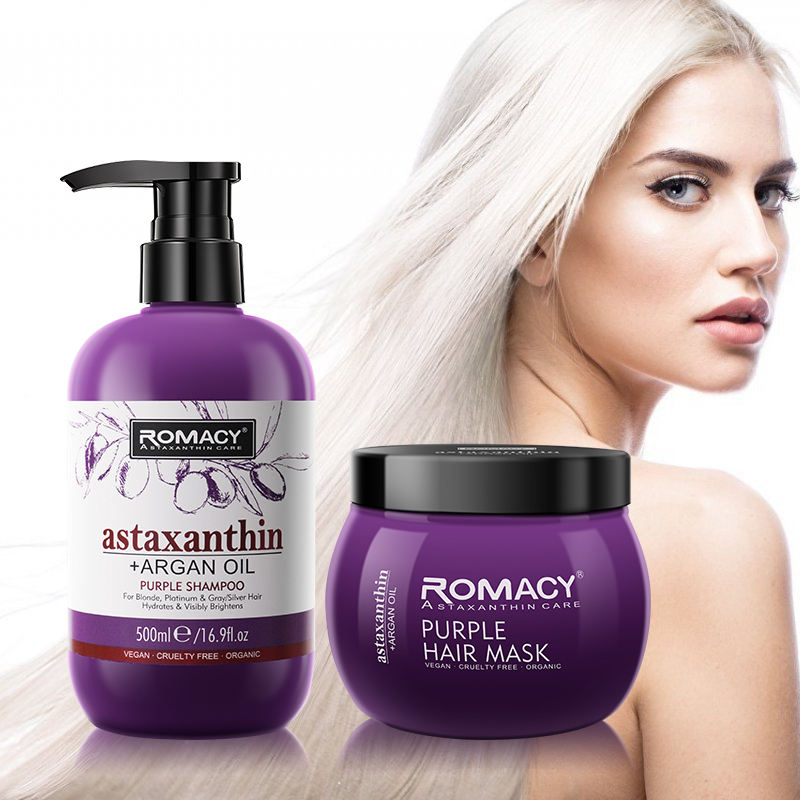
- Romacy Salon Purple Shampoo
- Ecolchi OEM Paraben-Free Collagen Shampoo
- Ecolchi Private Label Moroccan Argan Oil
- Ecolchi OEM Keratin Hair Conditioner
- Ecolchi OEM Organic Keratin Shampoo
CE Marking vs CPNP Registration: What’s the Difference?
CE Marking and CPNP registration are both required for cosmetic products sold in the EU, but they are different things. CPNP (Cosmetic Products Notification Portal) is a product-level registration in a centralized database. CE Marking is a conformity mark indicating the product meets EU safety standards.
CPNP registration is mandatory for all cosmetic products before sale. The process: appoint an EU-based Responsible Person (RP), conduct a safety assessment by a qualified toxicologist, create a Product Information File (PIF), then submit to CPNP. Cost: $500-$2,000 per product.
CE Marking is required for products that fall under specific EU directives, but most cosmetics are NOT subject to CE Marking. The exception is products with specific health or safety claims (e.g., sunscreen, anti-aging with measurable effects) which may need CE as a medical device or biocidal product.
In practice, for most hair care products (shampoo, conditioner, hair mask, hair oil, styling products), only CPNP is required. CE Marking only applies to specialty products with specific regulated claims.

EU Cosmetic Regulation 1223/2009: The Full Picture
EU Cosmetic Regulation 1223/2009 is the primary law governing cosmetic products in the EU. It was adopted in 2009 and fully replaced the older Cosmetics Directive 76/768/EEC in 2013. The regulation is directly applicable in all EU member states without needing national transposition.
Key requirements: (1) safety assessment by a qualified toxicologist (the ‘safety assessor’), (2) Product Information File (PIF) maintained for 10 years after the last batch, (3) CPNP notification before market placement, (4) Responsible Person (RP) based in EU, (5) ingredient labeling using INCI nomenclature, (6) batch traceability, (7) GMP compliance (ISO 22716 is the recognized standard).
Prohibited ingredients: ~1,600 substances are banned or restricted. The most relevant for hair care: formaldehyde, certain parabens (butyl, propyl), some phthalates, and several allergens above specified concentrations. See Annex II (prohibited) and Annex III (restricted) of the regulation.
Annexes updated regularly: the 2025 update added several new allergens to Annex III that require labeling when present above 0.001% in leave-on products. Brand owners should check for updates before each product launch.
See our FDA registration guide and ISO 22716 standards for related context.
EU CPNP Registration: Step-by-Step
Step 1: Appoint a Responsible Person (RP). The RP must be a legal entity or person based in an EU member state. Common options: a dedicated regulatory consulting firm, a distribution partner, or a subsidiary. Cost: $1K-$5K setup + $500-$2K annually.
Step 2: Prepare a Product Information File (PIF). The PIF includes: product description, ingredients with concentrations, safety assessment by a qualified toxicologist, manufacturing process overview, microbiological and stability testing results, and packaging information. Cost: $500-$2K per product.
Step 3: Conduct the safety assessment. A qualified toxicologist (typically a pharmacist or chemist with toxicology training) reviews the formula and confirms safety under normal and foreseeable use. The assessment must follow EU SCCS guidelines. Cost: $300-$1,500 per product.
Step 4: Submit to CPNP portal. The portal (ec.europa.eu/growth/sectors/cosmetics/cpnp) is free but requires careful data entry. Submit: product name, category, ingredients, RP details. Allow 1-3 business days for processing.
Step 5: Maintain the PIF for 10 years after the last batch. Update if formulation, manufacturing, or supplier changes.
See our FDA registration guide and certifications overview for context.
EU CPNP Mistakes to Avoid: Real-World Examples
Mistake 1: Listing the product in CPNP before the safety assessment is complete. CPNP requires the safety assessment to be done first, but the portal doesn’t validate this. Brand owners sometimes skip and get caught at customs.
Mistake 2: Not appointing a Responsible Person (RP) before listing. CPNP requires RP details. Some brand owners list their own address (non-EU) and get rejected or face customs issues.
Mistake 3: Incomplete ingredient disclosure. CPNP requires full ingredient list. Some brands use ‘and other ingredients’ to protect trade secrets. Not allowed.
Mistake 4: Not updating CPNP when formulation changes. Like FDA, CPNP requires updates within 120 days of any formulation change. Most brands miss this.
Mistake 5: Not maintaining PIF for 10 years. EU requires PIF to be available for 10 years after last batch. Many brands don’t have a system to maintain this.
Real cost of mistakes: a single customs seizure of non-compliant cosmetics can cost $20K-$100K in lost inventory, return shipping, and fines. The cost of compliance ($2K-$5K per product) is always cheaper.
See our FDA registration guide and ISO 22716 for context.
Ecolchi Group EU Compliance Support
Ecolchi Group’s EU CPNP service includes: (1) assigning a Responsible Person (RP) based in Germany, (2) safety assessment by certified toxicologist, (3) CPNP registration submission, (4) ongoing PIF maintenance for 10 years, (5) renewal support when formulas change.
Cost: included in our OEM service for orders 1,000+ units. Separate pricing for ODM: $500-$1,500 per product depending on complexity.
We support brand owners in all 27 EU member states plus UK, Switzerland, and Norway. CPNP is required for all of these markets.
For brands entering multiple EU countries, we recommend a single CPNP registration that covers all markets, rather than separate registrations per country. This is the standard approach and accepted by EU regulators.
See our FDA registration and ISO 22716 for more.
Frequently Asked Questions
What is CE marking for cosmetics?
CE marking is a European conformity mark required for some cosmetic products sold in the EU.
Which hair care products need CE marking?
Sunscreens, certain hair dyes, products with specific UV protection claims. Most shampoos, conditioners, masks, and oils do NOT require CE marking.
How much does CE marking cost?
Cost: $1,500–$4,000. Time: 2–4 weeks.
What is the difference between CE marking and EU CPNP notification?
CPNP notification is required for ALL cosmetics sold in the EU (free, self-registration). CE marking is only required for specific product categories.
Do I need CE marking to sell in the EU?
Only for specific product categories. For most hair care, CPNP notification is sufficient.
About the Author
Ecolchi Editorial Team — 21 years of hair care manufacturing expertise. ISO 22716 / GMP / FDA / CE certified factory in Guangzhou, China. 1.2M+ bottles/month capacity. 9 in-house brands: Karseell, Ecolchi, Pallamina, Lusstaly, Romacy, Navensi, Chinchy, Delofil, Hischer. Exporting to 130+ countries.
Reviewed by: Chinchy R&D Team (6 graduate engineers, 20+ new products per year)
Sources & References:
Request Free Ce Marking Cosmetics Consultation
No MOQ commitment. Sample lead time 3–5 days. Response within 24 hours.